

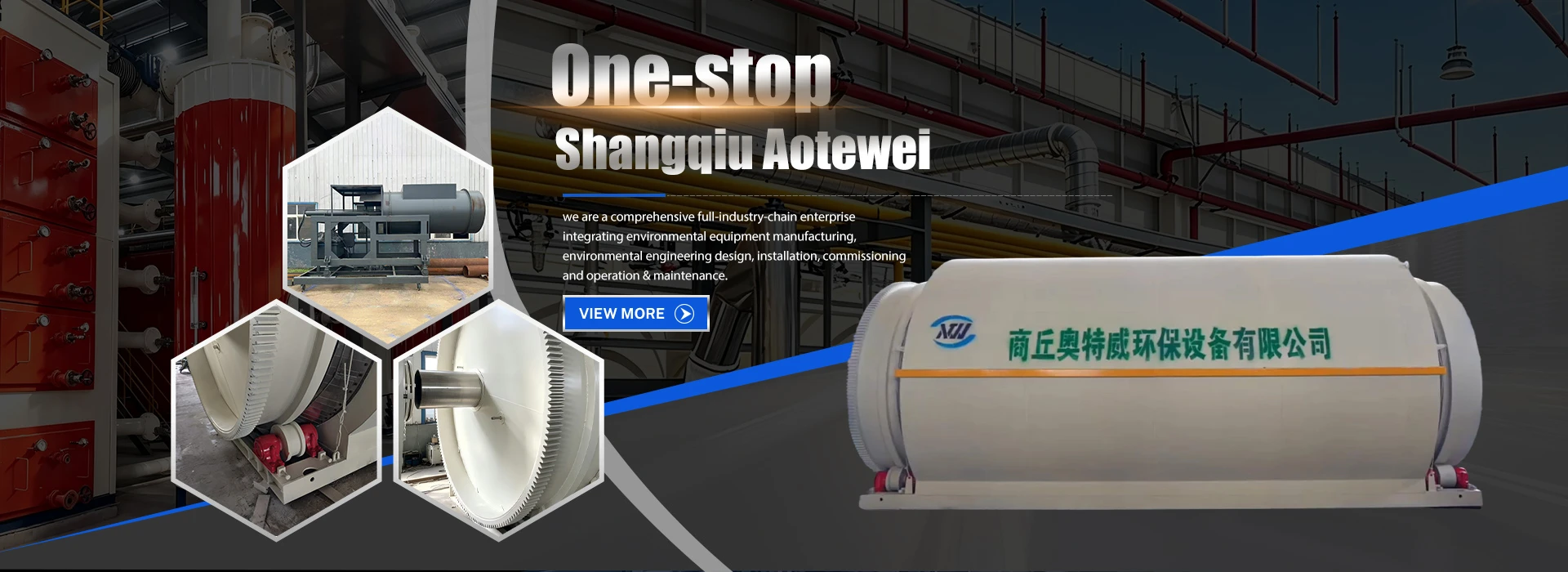
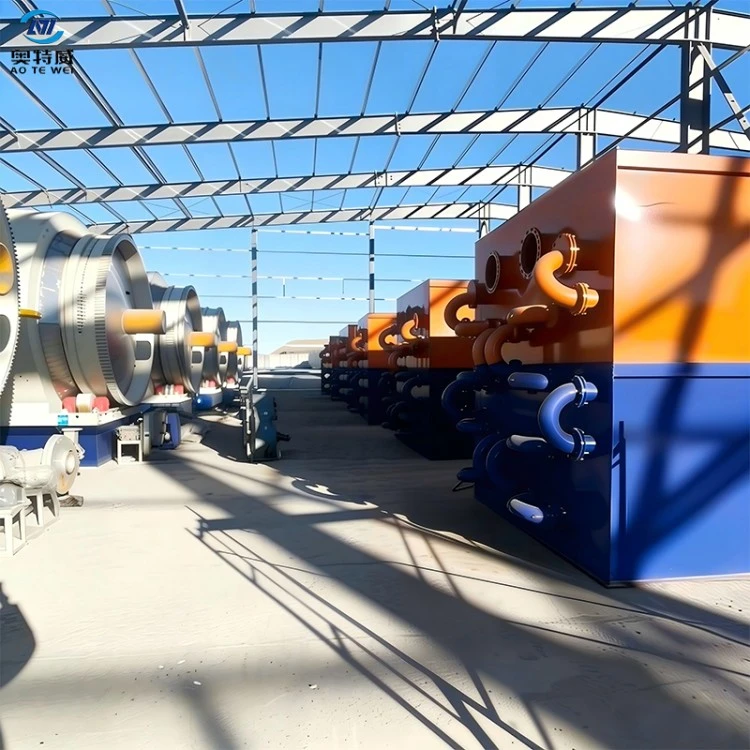
Shangqiu Aotewei Environmental Protection Equipment Co., Ltd. is one of the leading manufacturers and suppliers of refinery sludge pyrolysis plant in China. We are committed to providing high quality customized products with competitive price. If you're going to buy ISO certified refinery sludge pyrolysis plant, welcome to get quotation from our factory.
Refinery Sludge Pyrolysis Plant
Our Refinery Sludge Pyrolysis Plant is a continuous refinery sludge treatment plant designed for conditioned and pre-treated refinery sludge, with a published processing capacity of 30–40 tons per day. It integrates sealed screw feeding, multi-section indirect heating, oil-gas condensation, combustible gas recycling, and sealed residue discharge into one processing line. It is also suitable for tank bottom sludge and oilfield sludge under appropriate pretreatment conditions, with 24-hour continuous feeding, pyrolysis oil recovery, and solid residue discharge.
Refinery Sludge Processing Capability
The plant is designed to process refinery sludge that has undergone conditioning and pretreatment. Feed materials should be screened to remove stones and large foreign objects before entering the processing system.
For high-moisture sludge, preliminary dewatering is recommended. High-viscosity materials require particular attention to feeding conditions because excessive viscosity can increase screw-feeding torque and affect continuous operation.
The feeding system uses a jacket-heated screw conveyor with multi-stage air-lock sealing. This configuration supports sludge transfer into the pyrolysis chamber while reducing material adhesion and feeding interruptions.
Applicable feedstocks include:
- Refinery sludge after conditioning and pretreatment
- Tank bottom sludge
- Oilfield sludge
Processing Capacity and Equipment Configuration
The published processing capacity of this continuous refinery sludge pyrolysis plant is 30–40 tons per day. It adopts a continuous processing configuration with 24-hour continuous feeding and solid residue discharge.
| Configuration Item | Equipment Specification |
|---|---|
| Processing capacity | 30–40 tons/day |
| Processing mode | Continuous operation |
| Feeding system | Jacket-heated screw feeder |
| Feeding seal | Multi-stage air-lock sealing |
| Heating method | Multi-section indirect heating |
| Processing sections | Drying and dehydration, pyrolysis oil extraction, and residue calcination |
| Temperature control | Independent temperature control for the three processing sections |
| Oil recovery | Multi-stage condensation and separation |
| Combustible gas utilization | Recycled to the furnace as the primary heating source |
| Residue discharge | Sealed negative-pressure discharge |
| Residue cooling | Water-cooling system |
The three processing sections have independent temperature control, allowing the drying, pyrolysis, and residue treatment stages to operate under their respective process settings.
Pyrolysis Process and Oil Recovery
The refinery sludge oil recovery system combines sludge drying, thermal decomposition, oil-gas separation, and residue discharge.
- Feeding and Sealing: Conditioned sludge enters through the jacket-heated screw feeding system, with multi-stage air-lock sealing.
- Drying and Dehydration: The first processing section reduces moisture in the feed material.
- Pyrolysis Oil Extraction: The material enters the indirectly heated pyrolysis section for thermal decomposition.
- Oil-Gas Condensation: Generated oil vapor passes through a multi-stage condensation and separation system for oil recovery.
- Combustible Gas Recycling: Recovered combustible gas is returned to the furnace as the primary heating fuel.
- Residue Treatment: The remaining solid material passes through the residue treatment section before sealed cooling and discharge.
This configuration integrates oil recovery and combustible gas utilization within the same processing line.
Automation and Operating Configuration
The plant is equipped with an integrated DCS intelligent monitoring system.
| Control Function | Available Configuration |
|---|---|
| Feeding monitoring | Feeding torque monitoring |
| Temperature monitoring | Independent monitoring of processing-section temperatures |
| Pressure monitoring | Internal furnace pressure monitoring |
| Gas monitoring | Oil-gas output flow monitoring |
| Overload protection | Automatic interlock shutdown for torque overload |
| Temperature protection | Automatic interlock shutdown for over-temperature |
| Pressure protection | Automatic interlock shutdown for over-pressure |
| Remote monitoring | Remote equipment operating-status viewing |
Under the published DCS centralized-control configuration, 2–3 operators per shift are assigned to central monitoring and field inspection. Additional personnel are required for sludge conditioning and pretreatment.
Environmental Protection and Residue Handling
The system incorporates sealed processing, combustible gas recycling, exhaust-gas purification, and controlled residue discharge.
- Sealed operation: A full-process micro-negative-pressure sealing design and air-lock sealing at feeding and discharge positions.
- Combustible gas utilization: Recovered combustible gas is returned to the furnace as the primary heating source.
- Exhaust-gas treatment: A supporting exhaust-gas purification system is provided.
- Residue cooling: Solid residue is cooled through a sealed water-cooling system before discharge.
- Residue handling: Fully cooled residue is discharged under sealed conditions to reduce contact with oxygen and the associated risk of re-ignition.
Final residue disposal and exhaust-emission requirements depend on the tested material properties and applicable environmental regulations at the project location.
Customization and Project Configuration
Available configuration options for this customized refinery sludge pyrolysis plant include:
| Customization Item | Available Option |
|---|---|
| Processing capacity | Customized high-capacity configurations |
| Exhaust-gas treatment | Enhanced flue-gas treatment |
| Liquid-level monitoring | Additional liquid-level-monitoring assemblies |
| Oil recovery | Deep-oil-purification versions |
Project engineering can also take account of feedstock characteristics and site conditions when developing the processing layout and supporting equipment configuration.
Equipment Delivery and Overseas Supply
The equipment is divided into functional modules for transportation and site assembly.
| Item | Supply Arrangement |
|---|---|
| Standard equipment modules | 40HQ container loading |
| Oversized heavy components | Bulk cargo transportation |
| DCS control cabinets | Reinforced waterproof wooden cases |
| Pressure transmitters and temperature sensors | Reinforced waterproof wooden cases |
| Flange connections | Protective blind plates |
| Threaded connections | Anti-rust grease protection |
| Steel structures | Anti-rust primer and two layers of weather-resistant topcoat |
| Trade terms | EXW, FOB, CIF |
Available project documentation includes:
- Packing list
- Equipment dimensions and weight list
- General arrangement drawing
- Civil construction drawings
- Process flow diagram
Actual equipment photographs and operating-test videos are also available for pre-shipment review.
Manufacturing and Engineering Support
As a refinery sludge pyrolysis plant manufacturer, our production and engineering capabilities cover equipment fabrication, assembly, testing, and project support.
- Production facilities: 7,500 m² workshop with more than 60 production machines and equipment.
- Technical team: 2 senior technicians, 4 engineers, and more than 20 professional technical personnel.
- Fabrication: Automated submerged arc welding for main reactor manufacturing.
- Weld inspection: Ultrasonic nondestructive testing.
- Pressure testing: Hydraulic and pneumatic sealing tests for reactors, condensers, and gas storage tanks.
- Engineering support: Feedstock and site-condition analysis, process design, and equipment layout.
- Installation support: Installation guidance and operator training.
These capabilities support the manufacturing and engineering requirements of industrial pyrolysis equipment projects.
Request a Refinery Sludge Pyrolysis Plant Quotation
Send us your daily processing requirement, refinery sludge analysis report, or feedstock photographs to start a project-specific equipment evaluation.
Our team can review the available material information and discuss the 30–40 tons/day configuration, pretreatment requirements, processing system, and optional equipment arrangements for your refinery sludge treatment project.
Hot Tags: refinery sludge pyrolysis plant, China refinery sludge pyrolysis plant manufacturers, suppliers, factory


