

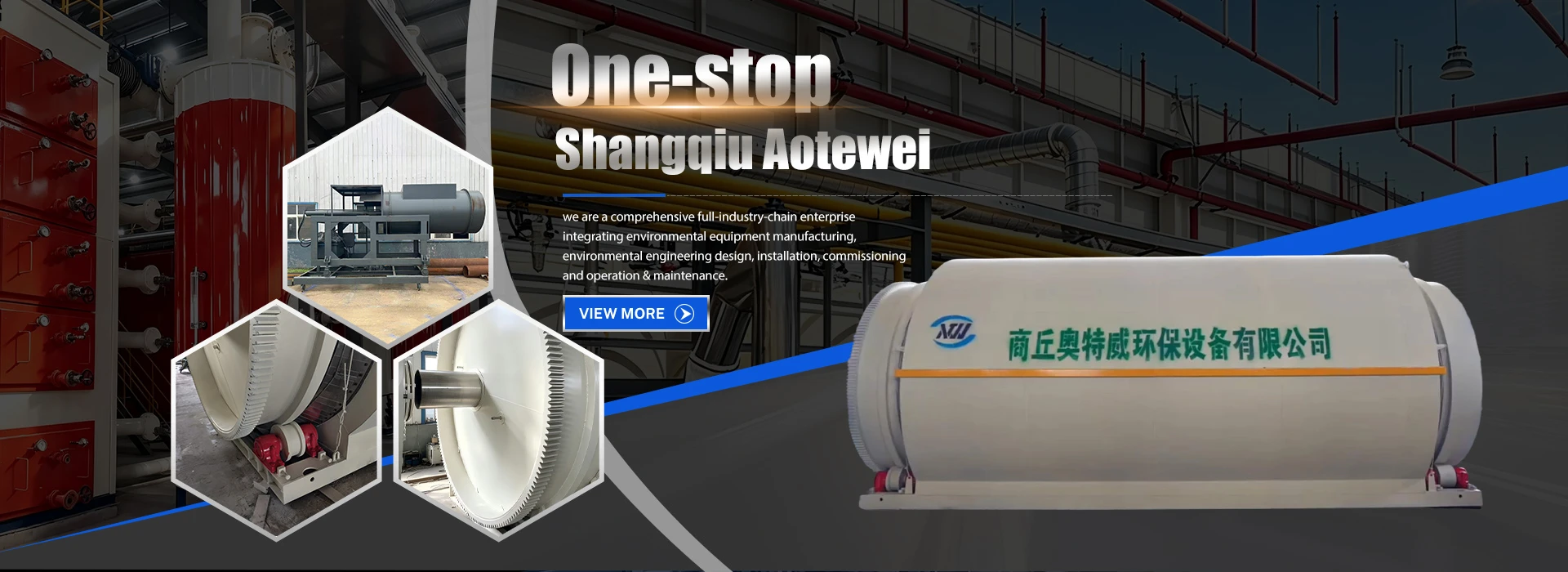
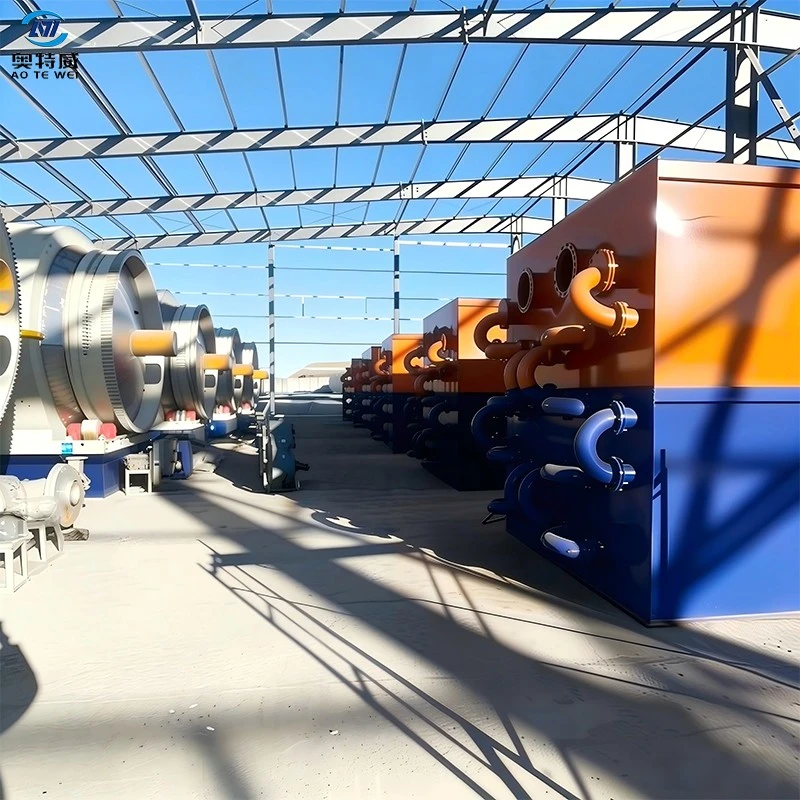
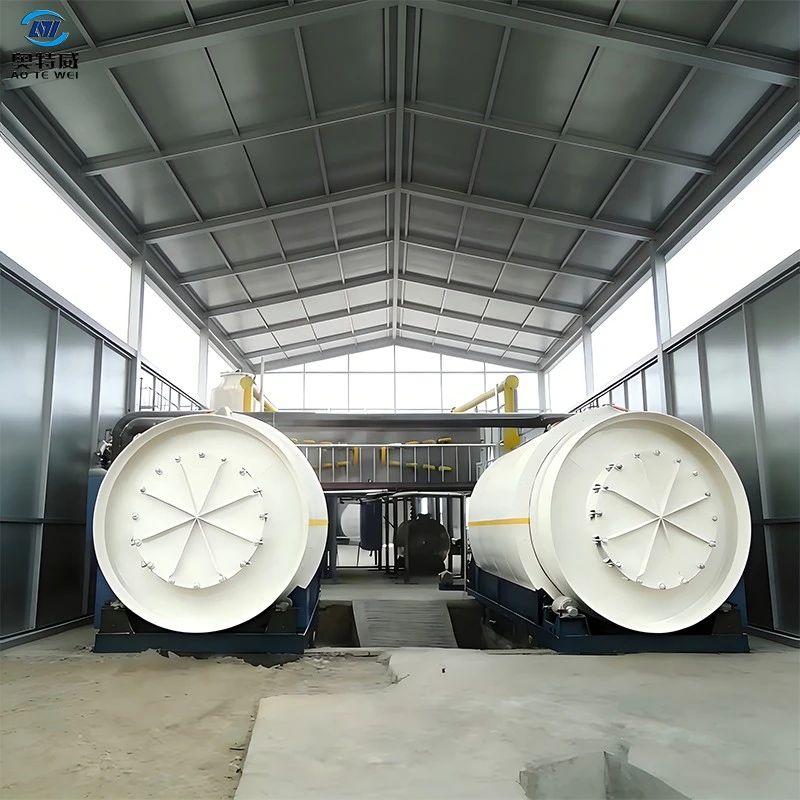
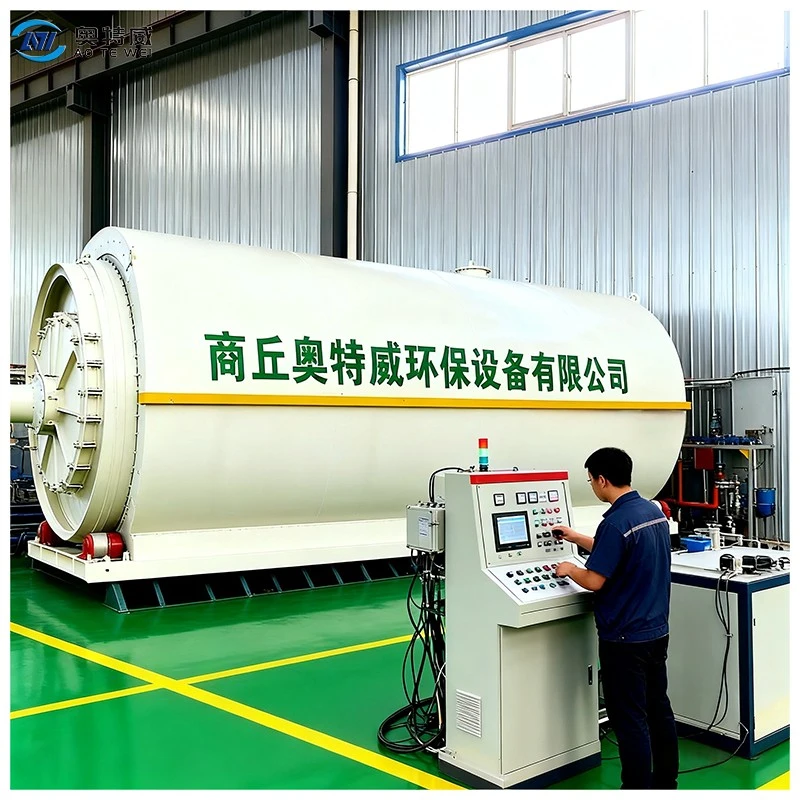
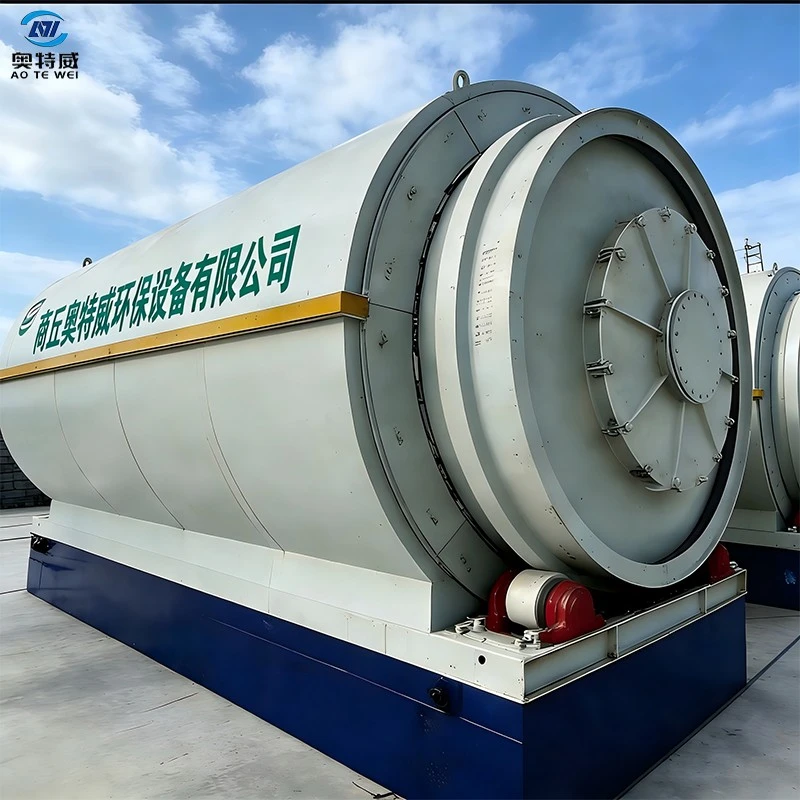
Shangqiu Aotewei Environmental Protection Equipment Co., Ltd. is one of the leading manufacturers and suppliers of tire pyrolysis machine in China. We are committed to providing high quality customized products with competitive price. If you're going to buy ISO certified tire pyrolysis machine, welcome to get quotation from our factory.
Products Description
Waste Tyre Thermal Decomposition Plant
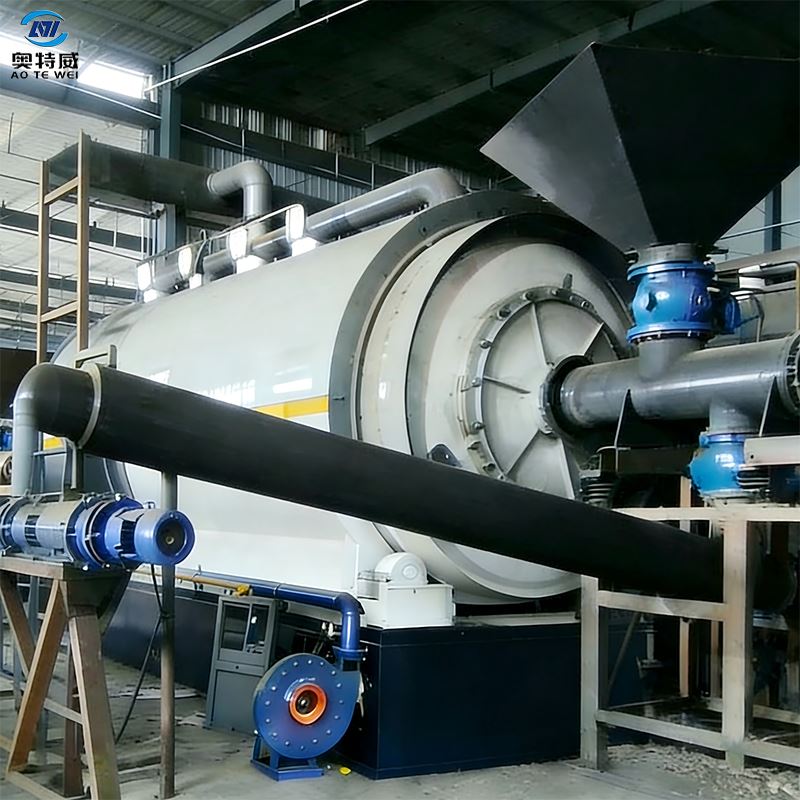
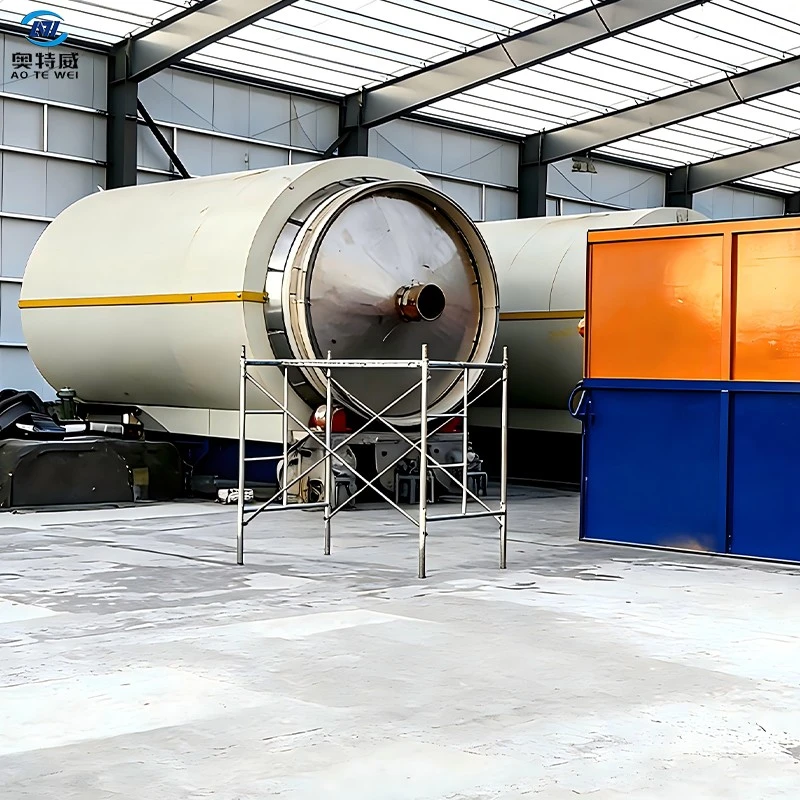
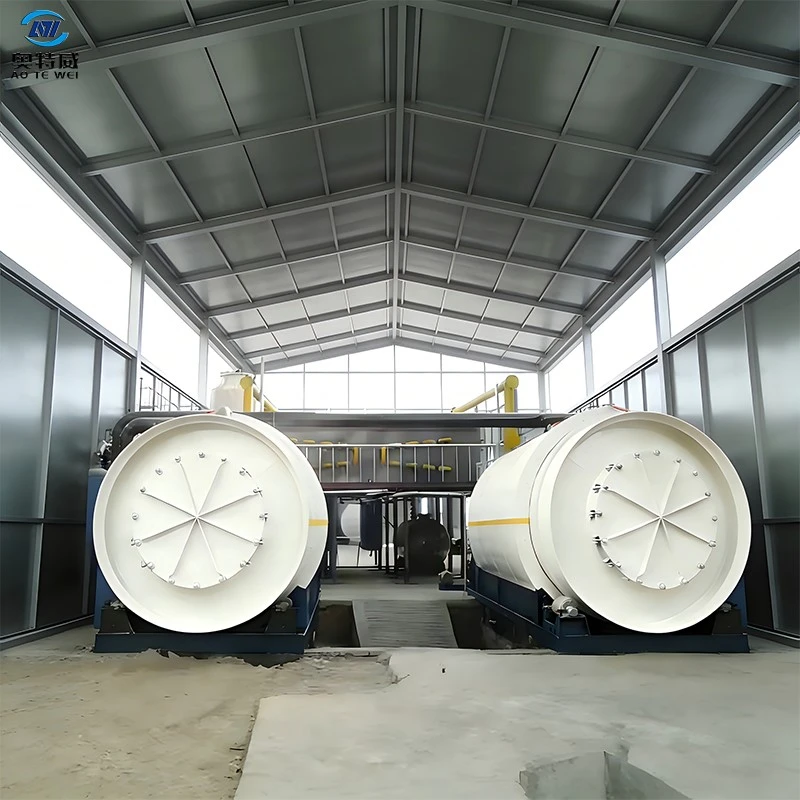
Waste Tyre Thermal Decomposition Plant is the core environmental-friendly equipment for resource-oriented disposal of waste tyres. By adopting temperature-controlled pyrolysis technology, it decomposes rubber components of waste tyres into four recyclable products: pyrolysis oil, carbon black, steel wire and combustible gas. Featuring a horizontal rotating reactor structure, the equipment operates in fully-closed condition without black smoke or peculiar odor. It helps tyre recycling enterprises achieve three goals: reduction, harmless treatment and resource recovery. It is a vital link for end-of-life tyre disposal in the circular-economy industrial chain.
Price Note: Equipment quotation fluctuates with steel market, configuration options and exchange rate. The reference price for standard 10-ton configuration is approximately USD 59,000 per set (excluding sea freight, import duties and on-site installation costs).
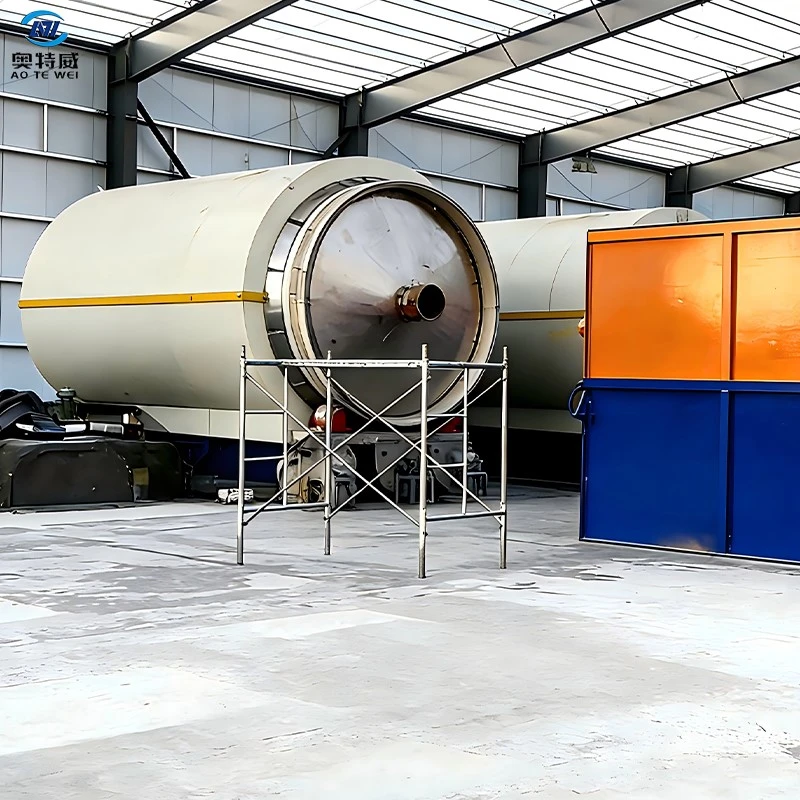
| Technical Parameter of the Pyrolysis plant | |||
| 1 | Suitable Raw Materials | Rubber/Plastic Products etc | Rubber/Plastic Products etc |
| 2 | Structure | Horizontal Rotation Type | Horizontal Rotation Type |
| 3 | Reactor Size | φ2600×6600mm φ2800×8000mm φ3000×8800mm |
φ1500×2000mm φ1800×4000mm φ2000×600mm |
| 4 | Capacity for One Batch | 8-10Mt; 12-15Mt; 18-20Mt | 1Mt; 3Mt; 5Mt |
| 5 | Oil Yield from Tyres | 38%~45% | 38%~45% |
| 6 | Work Pressure | Normal Pressure | Normal Pressure |
| 7 | Reactor Rotation Speed | 0.4R/M | 0.4R/M |
| 8 | Fuels Choice | Coal, Wood, Gas, Oil | Coal, Wood, Gas, Oil |
| 9 | Power | 15~22kw/h | 8~15kw/h |
| 10 | Cooling Method | Cycling Water | Cycling Water |
| 11 | Type of Drive | External Annular Gear | External Annular Gear |
| 12 | Heating Method | Direct Heating | Direct Heating |
| 13 | Type of Installation | Without Foundation | With Foundation / Integrated Base |
| 14 | Noise dB (A) | ≤ 85 | ≤ 85 |
| 15 | Operating Mode | Intermittent Operation | Intermittent Operation |
| 16 | Total Weight (MT) | 25~50 | 10~25 |
Features
① Segmented Temperature-controlled Pyrolysis Process with High Oil Conversion Rate
Waste Tyre Thermal Decomposition Plant adopts multi-zone segmented temperature-control technology. Low-temperature zone completes dehydration and softening of tyres; medium-temperature zone breaks rubber molecular chains for oil production; high-temperature zone realizes deep decomposition of residual carbon. Compared with single-constant-temperature pyrolysis, segmented temperature control increases pyrolysis oil yield by 5%-8%, reduces heavy-oil fractions, and produces pyrolysis oil with lighter color and higher calorific value.
② Steel Wire Separation & Discharge Device
After pyrolysis, residual steel wire and carbon black inside the reactor are separated by a special screw discharger. Steel wire is bundled neatly while carbon black is collected in closed mode, making subsequent manual slag-cleaning inside reactor convenient.
③ Fully-closed Negative-pressure Flue-gas Collection System
Waste Tyre Thermal Decomposition Plant runs under slight negative pressure. Flue-gas collecting hoods are installed at all potential leakage points including feeding port, discharging port and reactor door. Leaked oil-gas and dust are extracted in real time and sent to combustion chamber for incineration. Combined with desulfurization and dust-removal tower, the final flue-gas concentrations of particulate matter, SO₂ and NOₓ are far below national standard limits. The equipment can operate legally near residential areas.
④ Optional Pyrolysis Oil Refining Module
The equipment can be equipped with oil-water separation and oil refining module. Dehydration, slag removal and light-component enrichment are completed simultaneously during pyrolysis-oil condensation and collection. The output oil can be directly sold as fuel for industrial boilers without further post-treatment, shortening the conversion chain from raw materials to commercial products.
Advantages
① Full Resource Recovery of Products with Zero Solid-waste Discharge
All four products from tyre pyrolysis are recyclable. Pyrolysis oil can be used as industrial fuel or further refined into diesel oil; carbon black can be deep-processed into rubber reinforcing agent or carbon-black pellets; steel wire can be sold directly; combustible gas is recycled for combustion to realize energy self-supply. No secondary solid waste is generated in the whole process, realizing full utilization of waste tyres.
② High Energy Self-sufficiency & Low Operating Cost
Purified combustible gas generated from pyrolysis is fully delivered back to combustion chamber as heating fuel. No extra diesel, natural gas or coal is required during normal operation, achieving over 85% energy self-sufficiency.

③ Wide Compatibility for Various Tyre Specifications and Strong Raw-material Adaptability
The equipment can directly process various rubber-containing wastes such as tyre chunks, tyre rubber powder, inner tubes and conveyor belts. The large-diameter reactor door allows direct feeding of off-the-road tyres below 1000 mm diameter without tyre shredder, lowering upfront project investment.
Application Scenarios
Waste Tyre Thermal Decomposition Plant applies to the following business scenarios:
Waste Tyre Recycling & Processing Enterprises: As the end-disposal link of tyre recycling chain, it converts waste passenger-car tyres, truck tyres and off-the-road tyres into pyrolysis oil, carbon black and steel wire to extend industrial chain and improve added value of products.
Disposal of Trim Waste from Tyre Manufacturers: Treat production wastes such as waste rubber materials, defective tyres and trimmings from tyre factories. It relieves enterprises' pressure of environmental-protection disposal, and recycled pyrolysis oil can be used for factory boilers to cut energy procurement costs.
Regional Solid-waste Disposal Centers: Provide centralized waste-tyre disposal services for prefecture-level or county-level regions. Operate via government franchise or BOT model to gain dual benefits from disposal fees and sales of pyrolysis products.
Co-disposal for Rubber-product Factory Wastes: Process various waste rubber products such as rubber hoses, rubber belts and rubber shoes. Mixed pyrolysis with waste tyres expands raw-material sources and improves equipment utilization rate.
Packing & Shipping
Packing Method:
The skid-mounted main unit is bare-packed with anti-rust paint sprayed; large components such as condensers and desulfurization towers are bare-packed and covered with tarpaulin; precision parts including electric-control cabinets, instruments and valves are packed in fumigated solid-wood cases with moisture-proof and shock-proof fillers inside; scattered parts such as pipes, flanges and bolts are packed in classified bags and fixed on pallets.
Shipping Method:
Sea export is available. Extra-large-size equipment can be split for multi-container shipment or transported by bulk carrier to ports in destination countries.
Delivery Lead Time:
Production and shipment will be finished within 60 working days upon advance payment. Lead time for special customized configurations will be extended according to complexity.
FAQ
Q1: Is environmental protection approval required for equipment operation?
A: Yes. Waste tyre pyrolysis belongs to solid waste resource recovery project. EIA approval and pollutant discharge permit shall be obtained from local ecological environment authorities. We can provide technical documents such as environmental protection test reports and process descriptions to assist customers with EIA application.
Q2: What is the quality of pyrolysis oil and who are potential buyers?
A: The calorific value of our pyrolysis oil is about 40 42 MJ/kg with color ranging from dark brown to light brown. It can be directly sold as fuel oil for industrial boilers, kilns and ships. Potential buyers include glass factories, ceramic plants, cement plants, power plants, etc. For higher grade oil, distillation equipment can be matched to further process pyrolysis oil into diesel.
Q3: Can crude pyrolysis carbon black be sold directly? What about market demand? A: Crude pyrolysis carbon black can be sold directly. After deep processing including magnetic separation for steel wire removal, grinding and pelletizing, it can be sold as semi reinforcing carbon black grades N550/N660/N774 to rubber goods factories and tyre plants. It can also be used as pigment carbon black for printing ink and color masterbatch industries. We can supply supporting carbon black deep processing equipment to help customers increase carbon black product value.
Q4: What are requirements for operators?
A: 4 6 operators are required for one set of equipment, no special professional qualification needed. We provide free systematic operation training covering equipment start stop, temperature monitoring, daily maintenance and safety emergency handling. Operators can work independently within 15 days. The equipment can be fitted with PLC automatic control system, which triggers automatic alarm and shutdown protection when key parameters exceed limits.
Production Process Flow
- Raw-material Acceptance & Temporary Storage: Inspect recycled waste tyres to remove impurities, classify and store in rain-proof raw-material warehouse for reactor feeding.
- Feeding into Reactor: Feed whole tyres or tyre chunks into reactor through large-diameter door by hydraulic feeder or forklift. Close reactor door and fasten with bolts for tight sealing.
- Segmented Temperature-controlled Pyrolysis: Ignite combustion chamber for heating. The rotating reactor heats up section-by-section per preset program: low-temperature zone (150-250℃) for dehydration & softening; medium-temperature zone (250-400℃) for rubber-chain cracking and oil generation; high-temperature zone (400-500℃) for deep decomposition of residual carbon.
- Oil-gas Condensation: Pyrolysis-generated oil-gas flows into multi-stage condensation system via pipelines. Fast heat exchange and liquefaction are realized by forced circulating water cooling. Liquid pyrolysis oil flows into oil storage tank; non-condensable gas enters gas-purification system.
- Combustible-gas Recycling for Heating: Purified combustible gas passes through flame arrester and is delivered to combustion chamber as heating fuel to replace external energy and realize self-sufficient energy supply.
- Cooling & Discharging: Stop heating after pyrolysis. The reactor keeps rotating for accelerated cooling. When reactor temperature drops to safe range, carbon black and steel wire are discharged by screw discharger and collected separately.
- Optional Product Deep Processing: Pyrolysis oil can be sent to distillation equipment for diesel production; carbon black is processed into commercial carbon black via magnetic separation, grinding and pelletizing; steel wire is baled and delivered to steel mills for remelting.
- Flue-gas Purification & Discharge: Flue gas from combustion chamber undergoes deep treatment by desulfurization tower, dust collector and denitrification unit. Qualified flue gas is discharged through high-altitude chimney with zero black smoke and no peculiar odor in the whole process.
Hot Tags: tire pyrolysis machine, China tire pyrolysis machine manufacturers, suppliers, factory


