

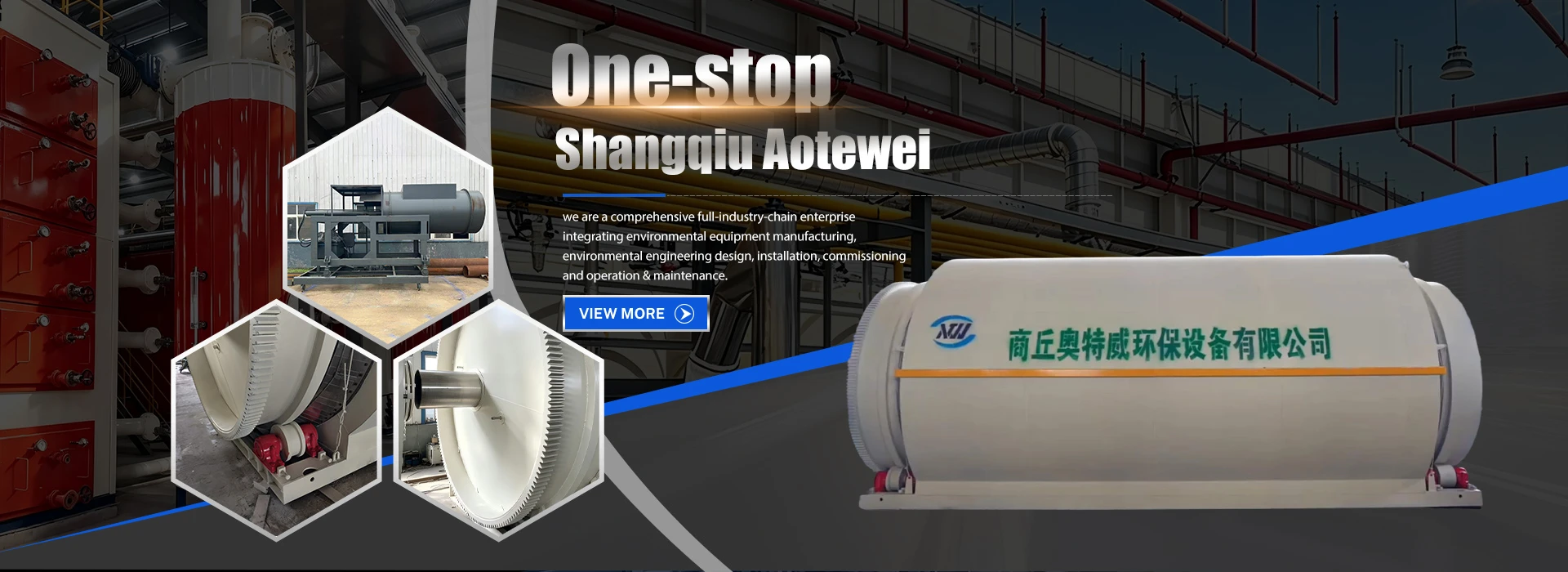
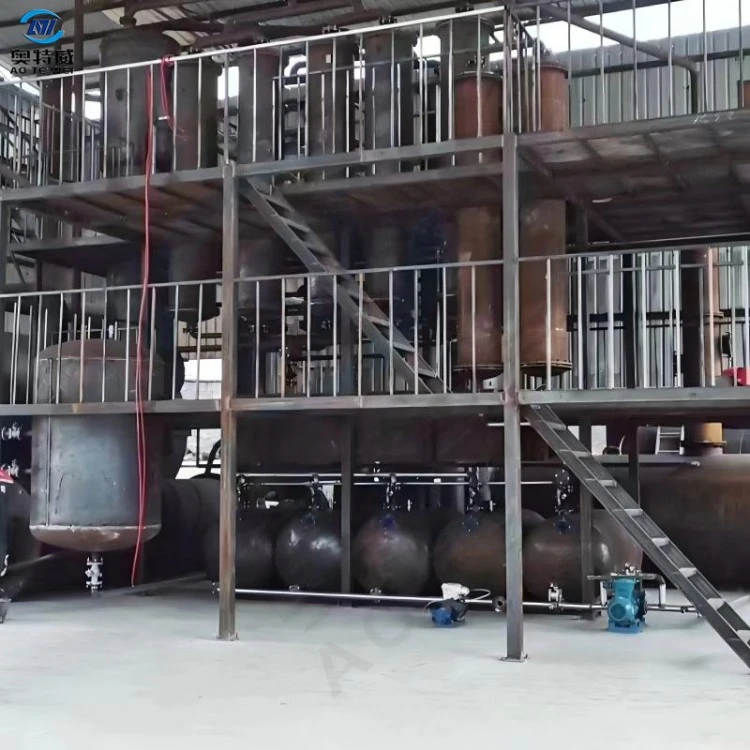
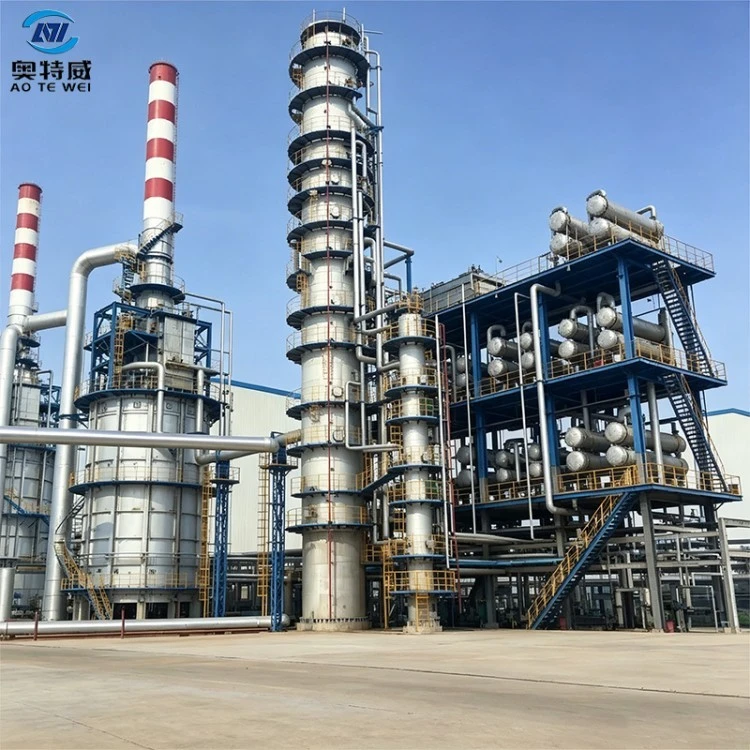
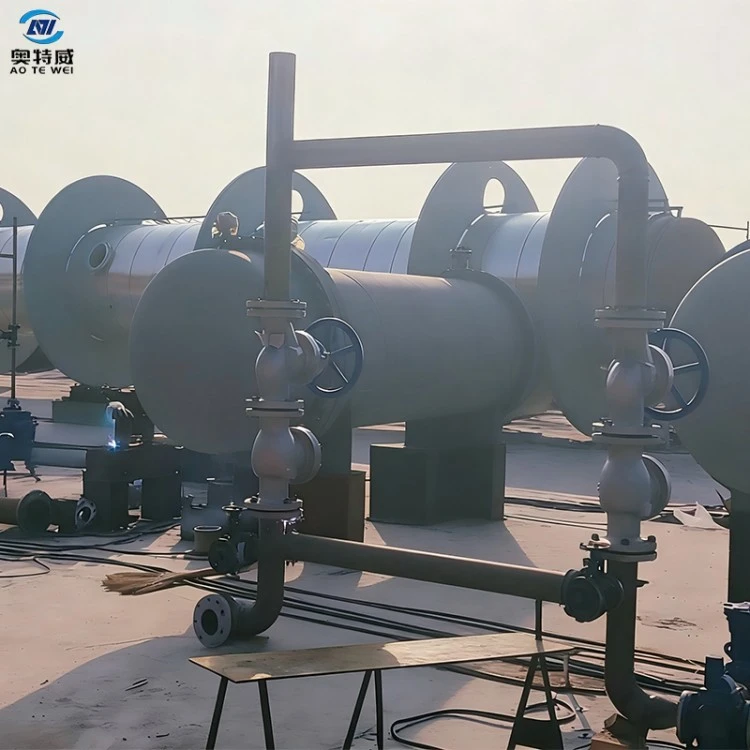
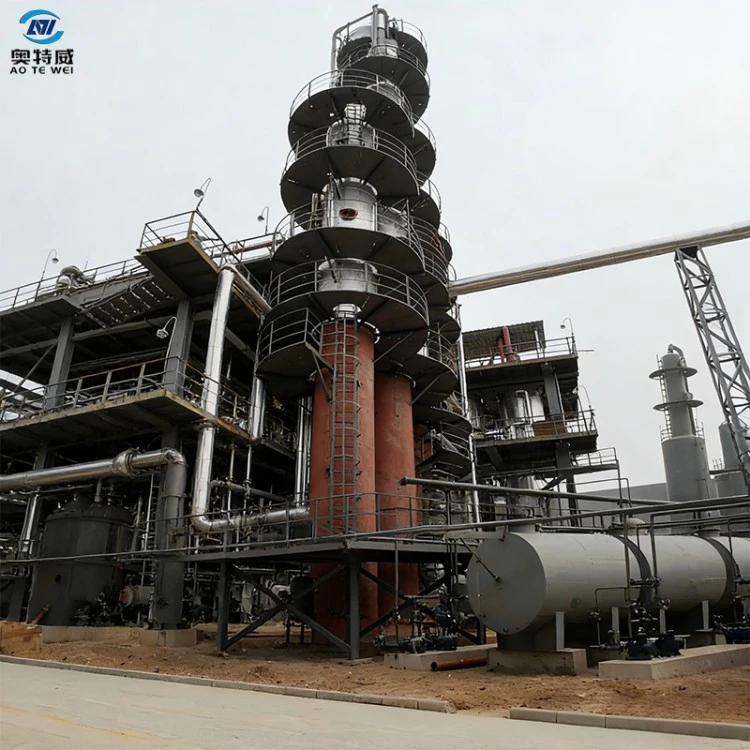
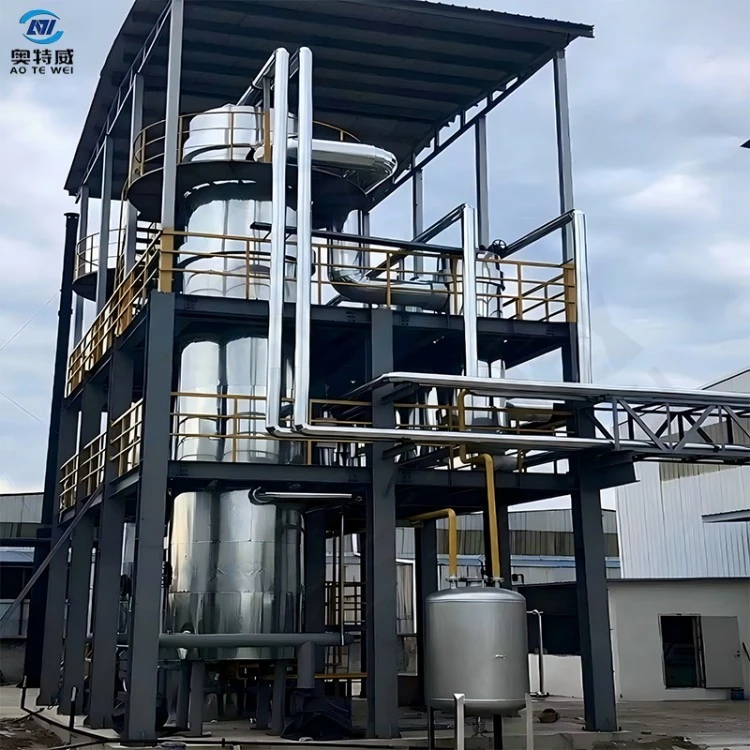
Shangqiu Aotewei Environmental Protection Equipment Co., Ltd. is one of the leading manufacturers and suppliers of used oil re-refining plant in China. We are committed to providing high quality customized products with competitive price. If you're going to buy ISO certified used oil re-refining plant, welcome to get quotation from our factory.
Product Name
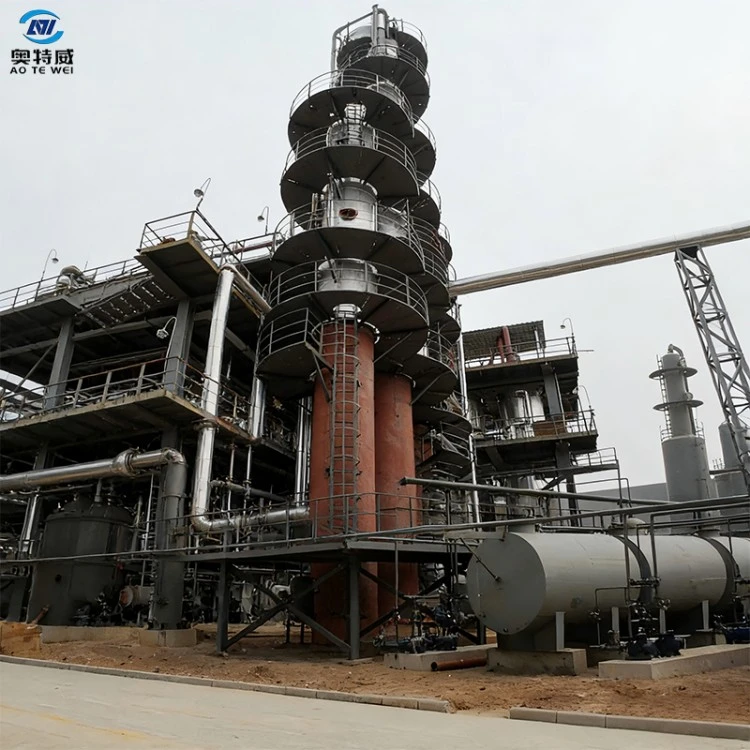
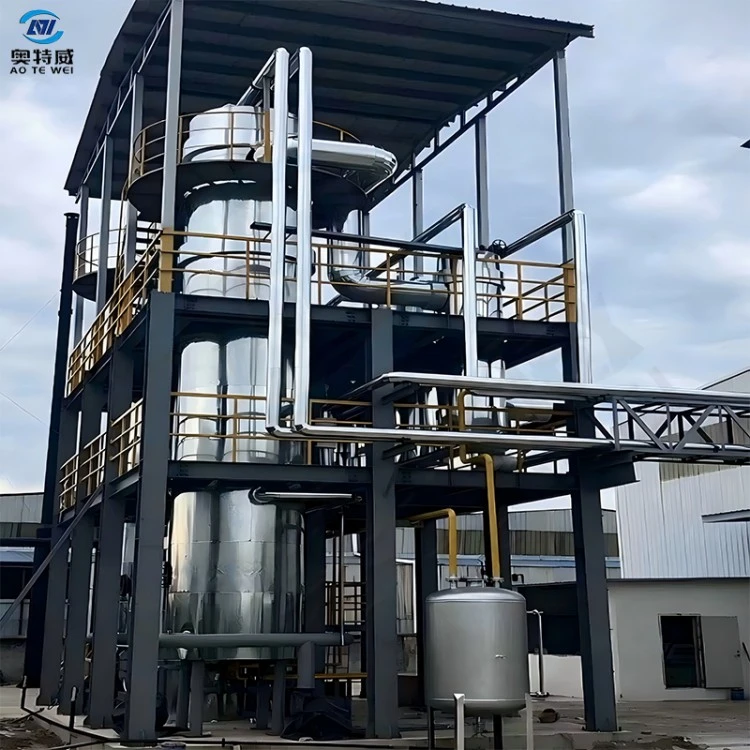
Complete-Set Waste-Lube-Oil Hydro-Re-Refining Plant (used oil re-refining plant). It realizes harmless regeneration for waste engine oil and waste industrial lubricating oil. Adopting the combined process of pretreatment, thin-film evaporation and hydrofining, it removes gums, asphaltenes, heavy-metal, sulfur and nitrogen impurities from waste oil to produce qualified Group I / Group II base oil. Equipped with light-oil recovery unit, it is suitable for large-scale waste-lubricating-oil resource-recycling projects.

| Key attributes - Vertical Distillation Equipment | ||
| 1 | Attribute | Value |
| 2 | Oil Type | Diesel |
| 3 | Phase | Three Phase |
| 4 | Voltage | Customized |
| 5 | Condition | New |
| 6 | Warranty | 1 Year |
| 7 | Raw Material) | Crude Oil, Used Ship Oil |
| 8 | Place of Origin | Henan, China |
| 9 | Brand Name | AOTEWEI |
| 10 | Name | Distillation Equipment |
| 11 | Advantages | Energy Saving, High Efficiency and Environmental Protection |
| 12 | Color | Customized |
| 13 | Function | Refined waste oil, tire‑derived oil, plastic‑derived oil, kitchen waste oil, etc. |
| 14 | Product Name | Refine equipment |
| 15 | After-sales Service Provided | Online Support |
| 16 | Type | Vacuum Filtration |
Features
1. Multi-stage pretreatment impurity-removal unit:
The used oil re-refining plant integrates sedimentation, centrifugal filtration and metal-removal pretreatment modules. It specially removes worn-metal particles, sludge and additive residues from waste engine oil, lowering poisoning risks of subsequent thin-film evaporator and hydrotreating catalyst. Mixed waste lubricating oils of different brands can be directly accepted as feedstock.
2. High-vacuum thin-film evaporation fractionation system:
Equipped with wiped-film thin-film evaporator, it achieves oil-product separation under high-vacuum and low-temperature conditions to avoid high-temperature cracking and coking of waste oil. Feedstock is separated into light-component fuel oil, base-oil fractions and heavy asphaltic residues with high fraction-separation precision and stable base-oil yield.
3. Fixed-bed hydrofining reaction module:
Special hydro-re-refining reactor for waste oil is installed with dedicated waste-oil regeneration catalyst. Under medium-temperature and medium-pressure conditions, sulfur, nitrogen, aromatics and gums are removed to improve oil color and oxidation stability, producing high-quality Group I and Group II base oil. It is different from ordinary distillation which only performs physical separation.
4. Closed-loop hydrogen circulation and tail-gas treatment unit:
The used oil re-refining plant is equipped with hydrogen circulation compressor for recycling unreacted hydrogen. Hydrotreating acidic tail gas is sent to desulfurization system instead of direct venting. The whole system runs under negative-pressure closed conditions to reduce oil-gas volatilization loss and improve workshop working environment.
5. DCS centralized automatic-control system:
The whole plant adopts DCS distributed control for centralized monitoring of thin-film evaporation, hydrotreating reaction, heat-exchange and separation sections. Interlock protection against over-temperature and over-pressure is configured for reactors. On-line sampling and analysis are carried out at key points to realize continuous and stable automatic production.
Advantage
1. High-quality products with qualified base-oil output:
Without clay-pressing process, hydro-upgrading eliminates gums and aromatics in waste oil. It produces Group I / Group II base oil available for blending finished lubricants, with much higher product added-value than fuel oil.
2. Wide feedstock adaptability:
It can process various waste lubricants such as waste engine oil, gear oil and hydraulic oil. Moderate mixing of feedstock is allowed without strict brand sorting, facilitating procurement of recycled waste-oil feedstock for projects.
3. Long catalyst service life and controllable operating loss:
Complete front-end metal-removal pretreatment greatly mitigates catalyst poisoning caused by heavy metals and extends catalyst replacement cycle. Hydrogen recycling cuts hydrogen-consumption costs.
4. Continuous closed-loop production with low environmental-protection pressure:
The whole-process negative-pressure closed-operation generates no large-volume clay solid waste. Tail gas is centrally desulfurized, and only a small amount of asphaltic residues are produced as solid waste. Hazardous-waste output is greatly reduced compared with traditional clay-treatment processes.
5. Flexible process combination for phased construction: Pretreatment plus thin-film evaporation can operate independently. Hydrotreating modules can be added at later phases. Physical distillation can be implemented first to produce crude base oil, and hydro-upgrading can be conducted afterwards for high-quality base-oil production, matching investors' phased-investment plans.
Application Scenarios
1. Large-scale waste-lubricant recycling & regeneration projects: Hazardous-waste disposal enterprises recycle social waste engine oil and produce qualified base oil for sales to realize cyclic utilization of waste lubricants.
2. Supporting regeneration projects for large-scale industrial and mining enterprises: Mines and large factories generate large quantities of waste hydraulic oil and gear oil. On-site regeneration produces base oil for internal lubricant blending and reduces procurement costs.
3. Overseas waste-lubricant resource-recycling projects: For overseas markets with abundant waste engine-oil resources, turn-key complete plants are exported to regenerate waste lubricants into commercial base oil and bypass environmental-restrictions on direct waste-oil combustion.
4. Upgrading & retrofitting for aging waste-oil distillation units: Add thin-film-evaporation and hydrotreating modules to original equipment that only produces fuel-oil via distillation. Upgrade fuel-oil products to high-value base oil and improve project returns.
Packing & Shipping
Skid-mounted units are optimally split to fit 40HQ container dimensions. Extra-long and extra-wide equipment is shipped by bulk ro-ro vessel. Complete packing lists are provided and customers' on-site loading supervision is supported.
FAQ
Q1: What feedstock can this used oil re refining plant process?
A: Main feedstocks include various waste mineral based lubricating oils such as waste engine oil, waste hydraulic oil and waste gear oil. Try to minimize mixing with tire / plastic pyrolysis oil. Large particle impurities in feedstock shall be filtered out. Intensified pretreatment procedures are required for feedstock with excessive heavy metal content.
Q2: What oil products can be produced and can they be directly used for lubricant blending?
A: Treated by thin film evaporation and hydrofining, Group I and Group II base oil are produced, which can be directly used as raw materials for blending various industrial and engine lubricants. Light component by products can be used as industrial fuel oil, and bottom asphaltic residues shall be disposed as hazardous waste.
Q3: What is the processing capacity of the equipment?
A: The standard model has a daily processing capacity of 15 50 tons of waste lubricating oil. Non standard capacity customization is available according to customer requirements, supporting 24 hour continuous operation.
Q4: What utility conditions are required for plant operation?
A: Hydrogen supply, heating heat source, circulating cooling water and 380V industrial power supply are required. It is equipped with tail gas desulfurization system and hazardous waste storage facilities for asphaltic residues.
Q5: What hazardous waste by products will be generated during production?
A: A small amount of asphaltic residues are classified as hazardous waste, together with waste filter residues. Spent hydrotreating catalysts require professional recycling upon end of life. Process tail gas is discharged up to standard after desulfurization, and no large volume clay generated solid waste is produced.
Company Profile & Production Capacity
Our company specializes in R&D and manufacturing of complete sets of solid-waste and waste-oil resource-recycling equipment. We possess pressure-vessel manufacturing qualification and a full-process R&D team covering pyrolysis, distillation and waste-oil hydro-re-refining. Our factory realizes independent manufacturing of reactors, thin-film evaporators, towers and other complete equipment. We provide turn-key services ranging from process design, equipment manufacturing, skid-mount integration, on-site commissioning to operator training. Our products have been exported to multiple countries in Africa, Central Asia and Southeast Asia. We can provide process-package design, assistance for EIA technical documents and on-site installation-guidance services for customers.
Hot Tags: used oil re-refining plant, China used oil re-refining plant manufacturers, suppliers, factory


