

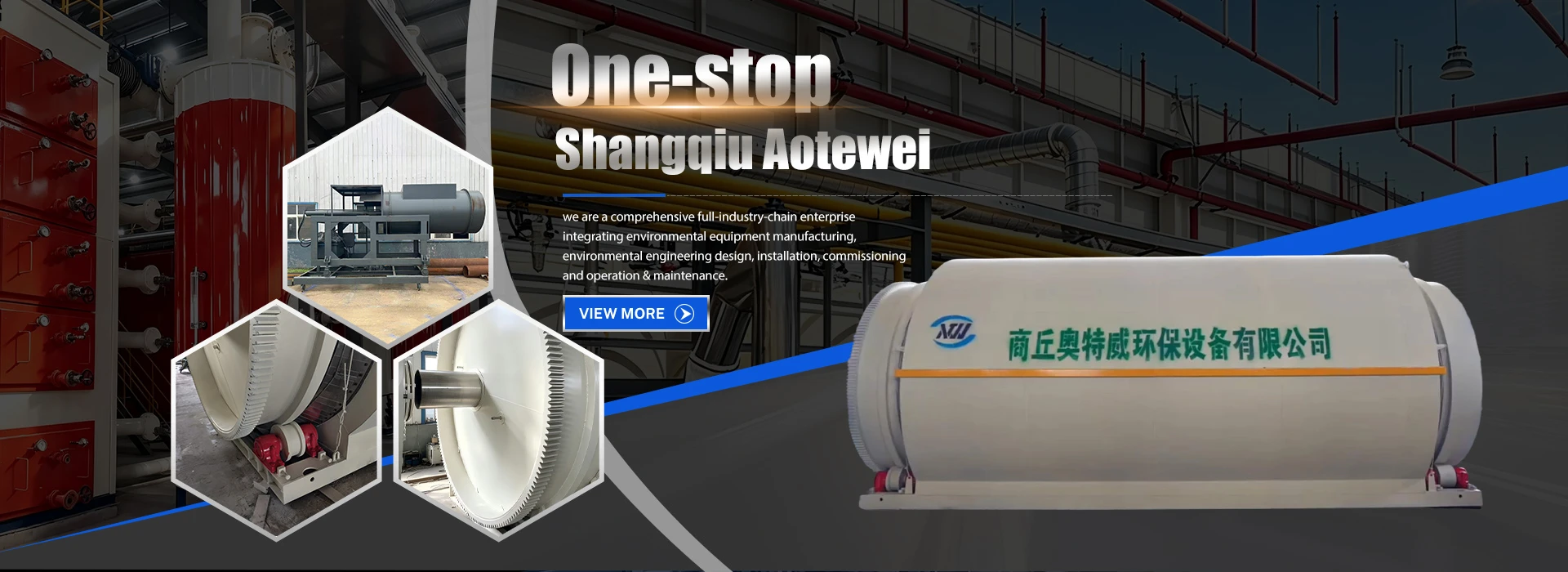

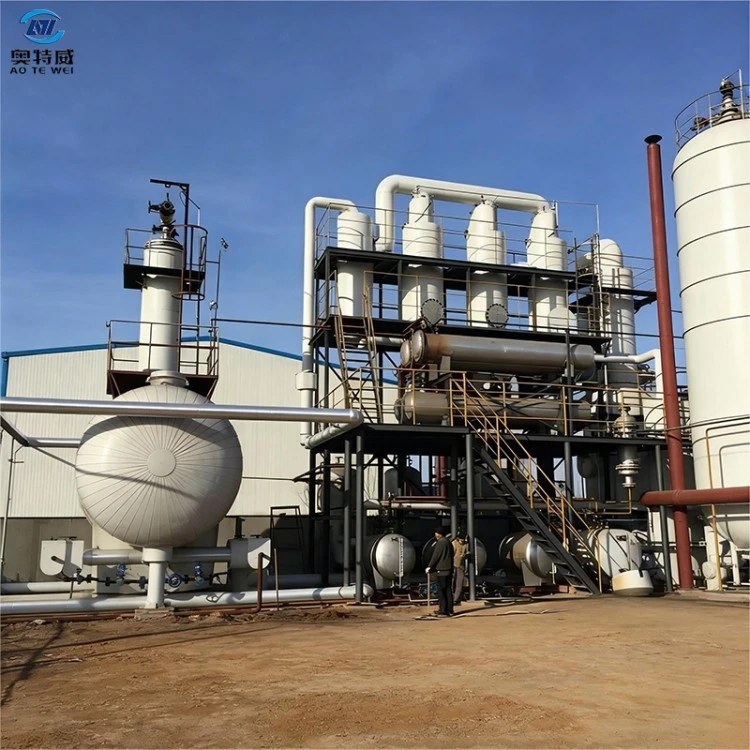

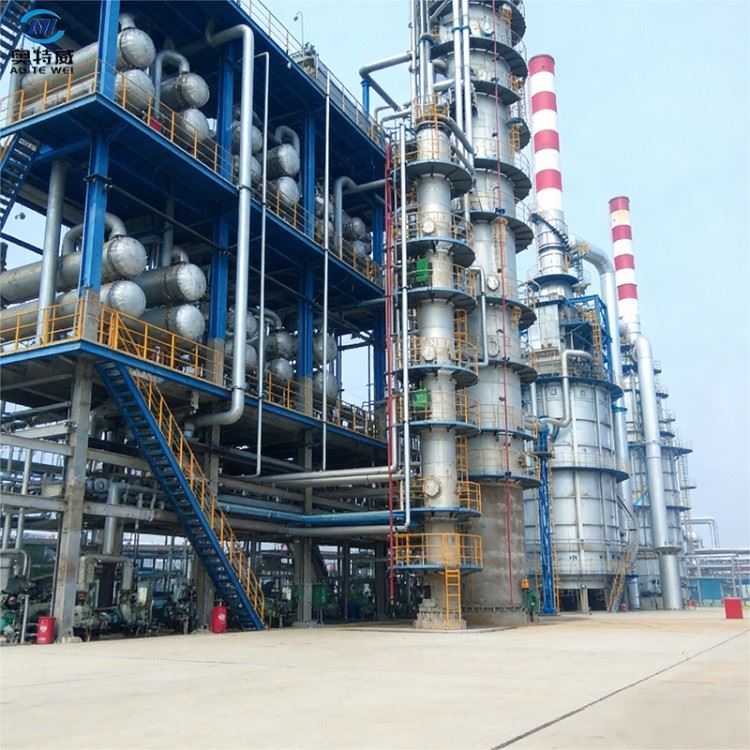
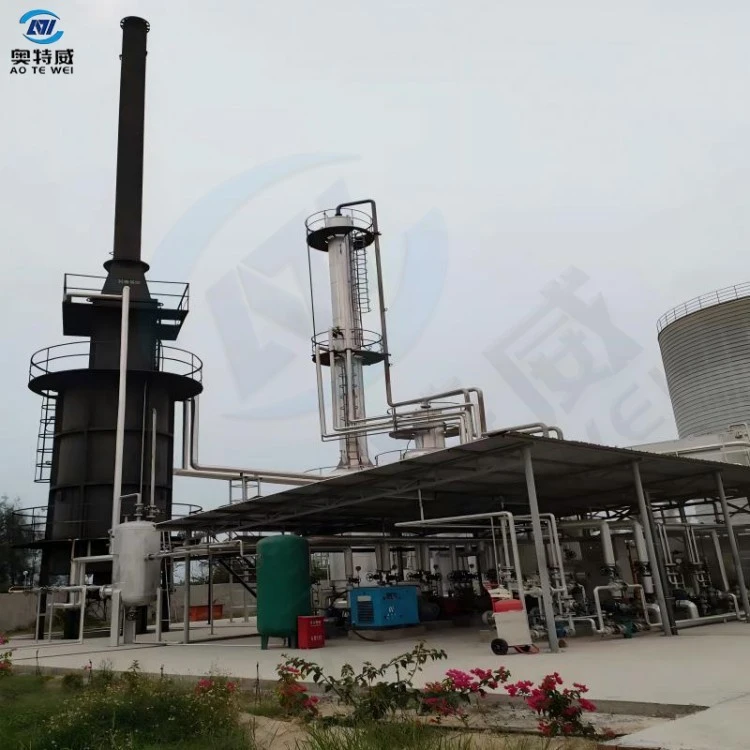
Shangqiu Aotewei Environmental Protection Equipment Co., Ltd. is one of the leading manufacturers and suppliers of petrochemical refinery plant in China. We are committed to providing high quality customized products with competitive price. If you're going to buy ISO certified petrochemical refinery plant, welcome to get quotation from our factory.
Product Name
Modular Integrated Petrochemical Refining System. This full-set refining unit is designed to handle multiple hydrocarbon feedstocks, including tire pyrolysis oil, used engine oil and crude oil. Adopting a mature process combining atmospheric distillation, precise fraction cutting and cyclic waste heat utilization, the system purifies and separates raw oil into high-value products such as naphtha and diesel. It also realizes effective recovery of process flue gas and residual heat, making it ideal for medium and small-scale petrochemical refining and deep oil processing projects.
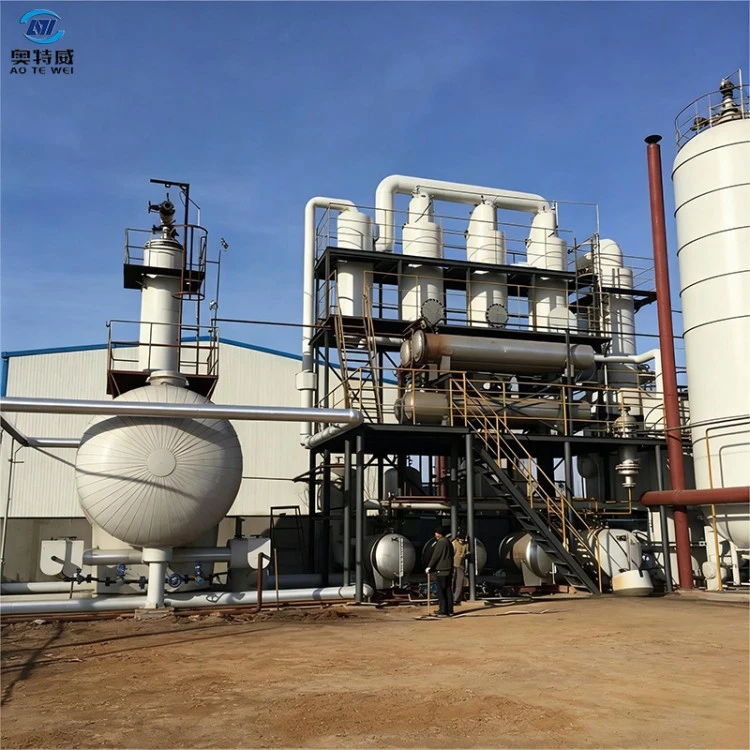
| Key attributes - Vertical Distillation Equipment | ||
| 1 | Attribute | Value |
| 2 | Oil Type | Diesel |
| 3 | Phase | Three Phase |
| 4 | Voltage | Customized |
| 5 | Condition | New |
| 6 | Warranty | 1 Year |
| 7 | Raw Material) | Crude Oil, Used Ship Oil |
| 8 | Place of Origin | Henan, China |
| 9 | Brand Name | AOTEWEI |
| 10 | Name | Distillation Equipment |
| 11 | Advantages | Energy Saving, High Efficiency and Environmental Protection |
| 12 | Color | Customized |
| 13 | Function | Refined waste oil, tire‑derived oil, plastic‑derived oil, kitchen waste oil, etc. |
| 14 | Product Name | Refine equipment |
| 15 | After-sales Service Provided | Online Support |
| 16 | Type | Vacuum Filtration |
Features
1. High-precision Atmospheric Fractionation System
The refining unit is equipped with a high-efficiency atmospheric distillation tower sized Φ800×23000mm, fitted with 30 sets of valve trays for stable mass transfer. The tower operates at a top temperature of 120℃ and bottom temperature of 350℃, classifying raw oil into light distillates, middle distillates and heavy residual components based on boiling point differences. The reflux tank is built with intelligent oil-water interface detection to achieve efficient separation and stable quality control of gasoline and diesel fractions.
2. Multi-stage Cascaded Waste Heat Recovery Network
The system adopts a gradient heat exchange process. High-temperature side-draw oil fractions preheat incoming raw materials through multiple heat exchanger groups. Matched with flue gas waste heat recovery devices including economizers and air preheaters, the unit lowers exhaust gas temperature to below 150℃. Recovered heat fully replaces part of furnace fuel consumption, effectively reducing processing cost per ton of oil.
3. Fully Closed Oil-Gas Condensation & Recycling System
Tower-top oil vapor is rapidly cooled and liquefied by horizontal circulating water condensers. The entire condensation and reflux process operates in a fully sealed state to realize classified collection of light and heavy oil fractions. Meanwhile, the supporting flare and gas recovery system performs sealed treatment on emergency vented gas and VOCs, minimizing flue gas escape and material loss to meet environmental discharge standards.
4. FSSS Intelligent Combustion Safety Supervision
The heating furnace is equipped with a complete Furnace Safety Supervision System (FSSS), featuring real-time flame monitoring and automatic fuel cut-off valves to ensure safe ignition, stable combustion and emergency interlock protection. A redundant CPU PLC integrates ESD/SIS safety interlock functions, and key measuring instruments are configured with dual backup design to guarantee overall operational stability.
5. Real-time Online Quality Monitoring & Interlock Protection
The unit is fitted with online density and moisture analytical instruments to continuously track the quality indicators of raw materials and finished oil pipelines. Temperature, pressure and flow sensors at key positions such as tower top and furnace outlet adopt redundant configuration. Storage tanks and distillation towers apply dual-level detection (radar + magnetic level gauge), with high and low liquid level interlocks to trigger automatic pump stop for fault prevention.
Advantage
1. Diversified Raw Material Compatibility
This petrochemical refining system supports multiple oil feed sources, including tire pyrolysis oil, waste engine oil and conventional crude oil. A single device can adapt to different types of raw oil refining requirements, offering highly flexible production configurations for various project scenarios.
2. Excellent Energy-saving & Cost Reduction Effect
Through multi-stage heat exchange and flue gas waste heat recycling, the furnace heat load is significantly reduced. The system effectively lowers fuel consumption and exhaust temperature, achieving prominent energy-saving performance and greatly cutting daily operational and production costs.
3. Accurate Fractionation & High Product Yield
With 30-layer valve tray structure and precise reflux adjustment, the unit realizes ultra-precise cutting of each oil fraction. The produced diesel and naphtha products feature stable quality and high yield rate, maximizing the economic value of raw oil materials.
4. Multi-layer Safety Interlock Protection
Integrated with FSSS combustion monitoring, redundant PLC control and ESD/SIS emergency interlock system, the equipment can automatically trigger safety shutdown once over-temperature, over-pressure and other abnormal conditions occur in furnaces, towers and pumps. Multi-dimensional risk control ensures safer and more reliable long-term operation.
5. Closed-loop & Eco-friendly Operation
The whole production process adopts fully closed oil-gas condensation recovery and sealed flare gas treatment. It effectively eliminates oil dripping, volatile leakage and irregular exhaust emissions, fully complying with strict environmental management standards and suitable for operation in standardized industrial parks.
Application Scenarios
1. Tire Pyrolysis Oil Refining Projects
Further refine crude tire pyrolysis oil through atmospheric distillation to produce standard diesel, naphtha and other marketable products, extending the industrial chain of waste tire resource recycling.
2. Waste Engine Oil Regeneration Projects
Distill and separate recycled waste lubricating oil to obtain qualified diesel fractions and base oil raw materials, realizing efficient reuse and resource regeneration of waste oil.
3. Primary Crude Oil Fractionation Projects
Provide one-stop primary processing for small-scale crude oil mining sites, separating crude oil into naphtha, diesel and heavy fuel oil to complete on-site crude upgrading.
4. Petrochemical Raw Material Preparation Projects
The produced naphtha can be used as high-quality feedstock for downstream petrochemical equipment such as cracking and reforming units to support chemical raw material production.
5. Small and Medium-sized Oil Deep Processing Projects
Suitable for oil trading enterprises and small processing factories to carry out on-site refining and fractionation, producing multiple finished oil products for sales and value-added processing.
Packing & Shipping
1. Static equipment including atmospheric distillation towers, heating furnaces, heat exchangers, condensers and reflux tanks are professionally treated with anti-corrosion and anti-rust coatings. All flange openings are covered with dust-proof protective caps. Super-high tower bodies are manufactured in segmented sections with reinforced base structures to ensure stable bare-pack marine transportation.
2. High-precision automatic control components such as PLC control cabinet, FSSS combustion system, online analytical meters and sensor assemblies are individually packed in shockproof and moisture-proof solid wooden cases. Standard ocean freight labels including This Side Up, Moisture Proof and Fragile are marked externally to avoid transit damage.
3. Tower tray valves, sealing gaskets, professional maintenance tools, wearable spare parts and valve-pipe fittings are classified and packaged separately. Each package is attached with an independent detailed packing list for port inspection and customer acceptance.
4. Main equipment modules are optimally split to adapt to standard 40HQ container sizes. Extra-long and oversized special components are delivered via bulk ro-ro vessels. Complete packing documents are provided to support customers' on-site loading supervision.
5. A full set of official technical documents are delivered together with goods, including PID process flow diagrams, equipment assembly drawings, pressure vessel inspection certificates, operation and maintenance manuals, spare parts lists and complete customs declaration files.
FAQ
Q1: What kinds of raw oil can this refinery process?
A: It is compatible with multiple feedstocks, including tire pyrolysis oil, waste engine oil, waste plastic pyrolysis oil and conventional crude oil. All raw materials need conventional sedimentation, impurity removal and dehydration pretreatment. Materials with excessive impurities require enhanced filtration treatment.
Q2: What finished products can be produced?
A: The system can stably produce diesel, naphtha, light and heavy fractional oil. Naphtha can be used as petrochemical raw material, while diesel can be directly used as commercial fuel for sales.
Q3: What is the daily processing capacity of the equipment?
A: Standard models support 5–50 tons of raw oil processing per day. We provide full non-standard customization services to adjust equipment parameters according to customers' actual production scale.
Q4: What fuel types are available for the heating furnace?
A: The furnace can use natural gas, pyrolysis gas, residual oil and other fuels. Equipped with a high-efficiency flue gas waste heat recovery system, the furnace thermal efficiency reaches above 92% with low fuel consumption.
Q5: How does the equipment ensure production safety?
A: Multi-level safety protection is formed by FSSS combustion supervision, redundant PLC control and ESD/SIS safety interlock system. Automatic safety shutdown will be triggered once over-temperature or over-pressure faults occur in furnaces, towers and pumping systems, ensuring zero-risk stable operation.
Production Process Flow
Raw oil feeding → Sedimentation, impurity removal and dehydration pretreatment → Multi-stage preheating via heat exchanger groups → Gradual heating to 350℃ by atmospheric furnace → Precise fraction cutting inside 30-tray atmospheric tower (light fractions from tower top, diesel fractions from side draw) → Tower-top oil gas cooled and liquefied by condensers → Oil-water separation in reflux tank → Classified storage of different oil products in respective tanks; heavy residual oil discharged from tower bottom. Flue gas passes through economizer and air preheater for waste heat recovery before emission. Emergency vented gas is centrally and sealed processed through flare and gas recovery system.
Hot Tags: petrochemical refinery plant, China petrochemical refinery plant manufacturers, suppliers, factory


