

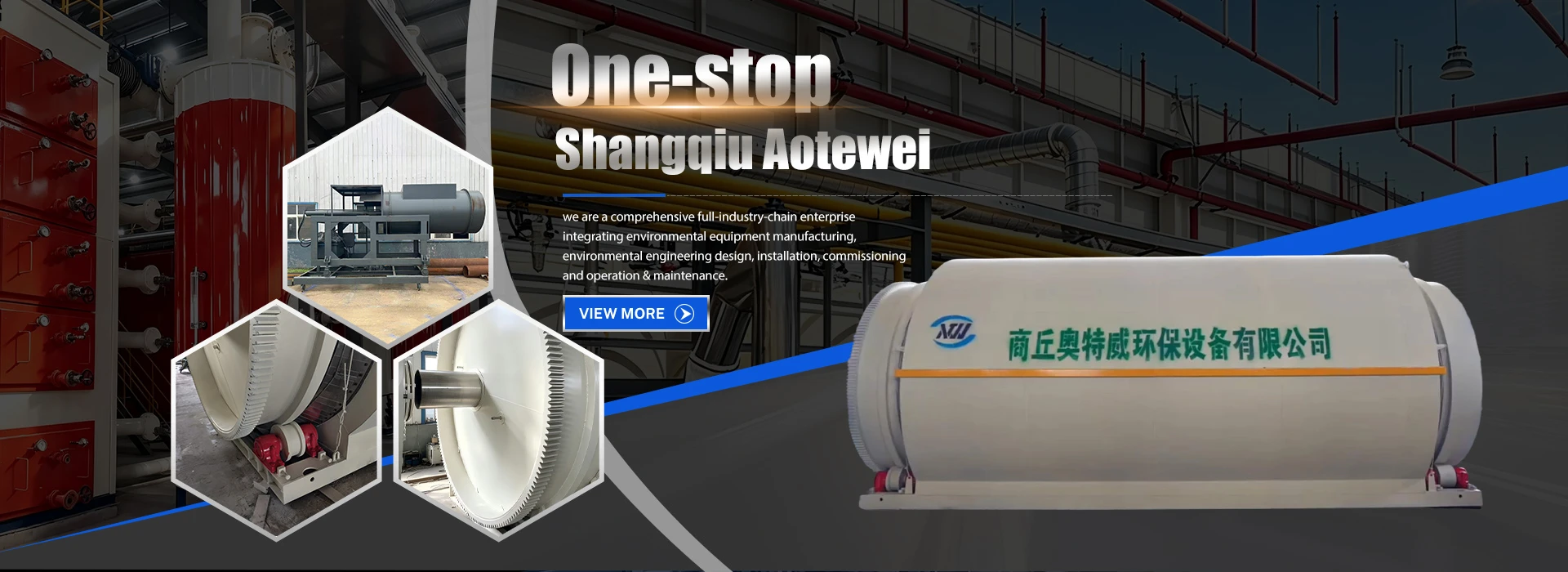
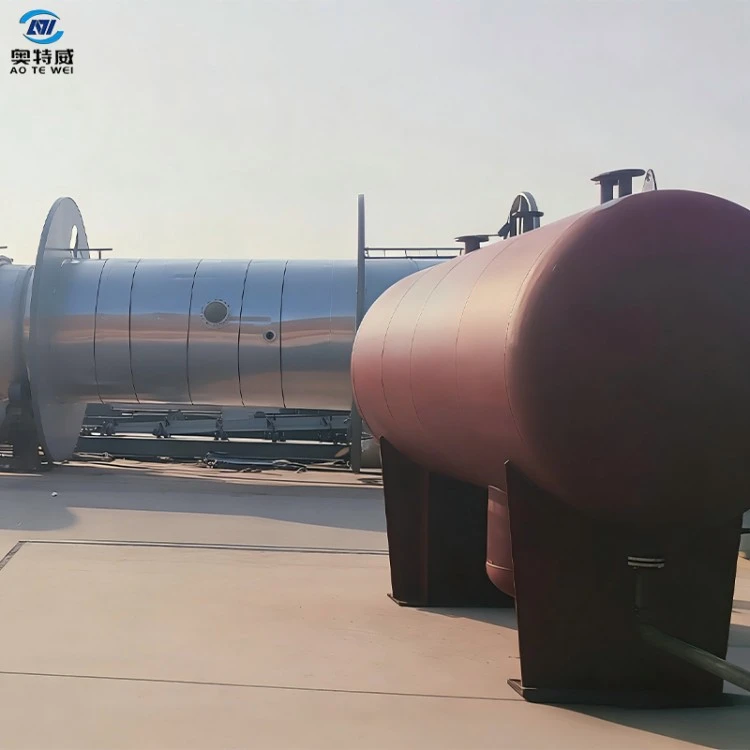
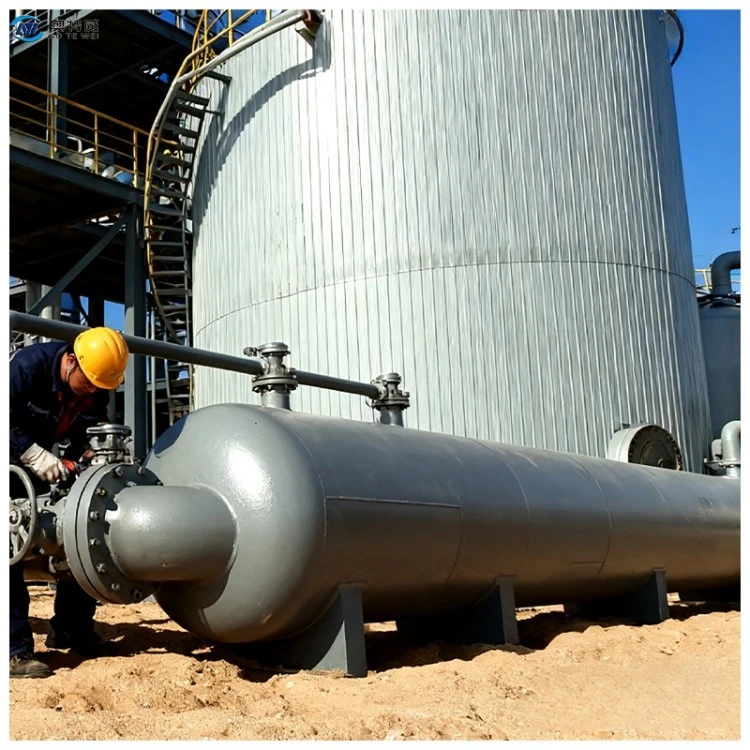
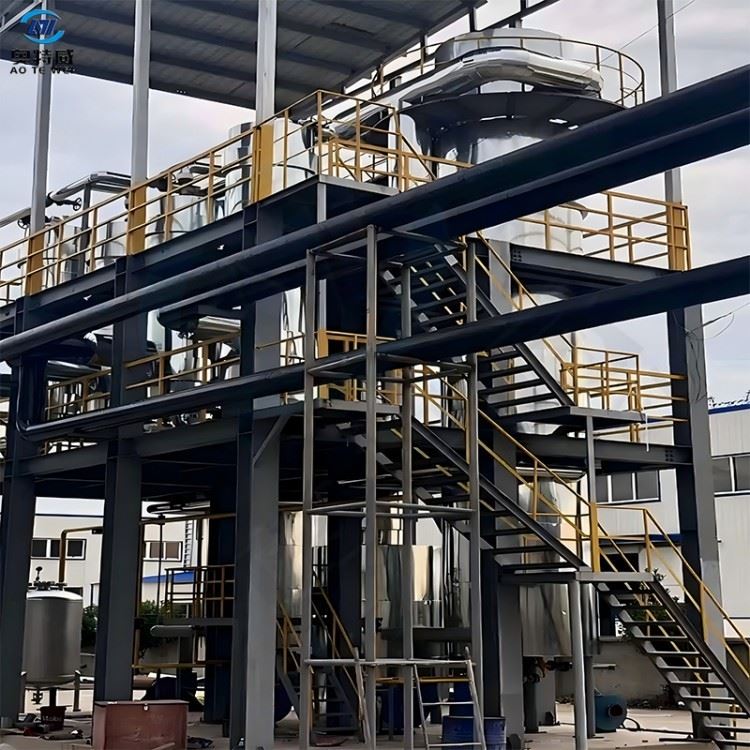
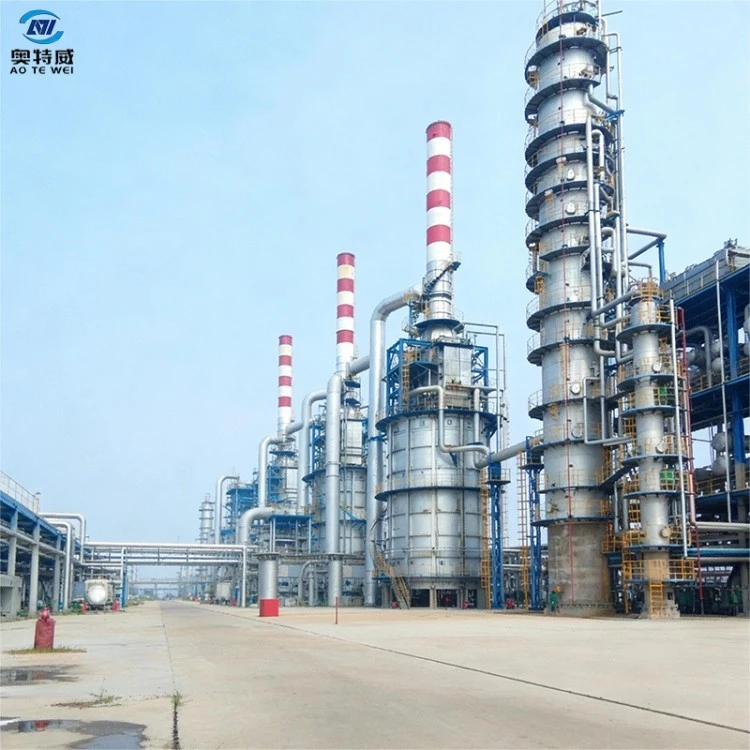
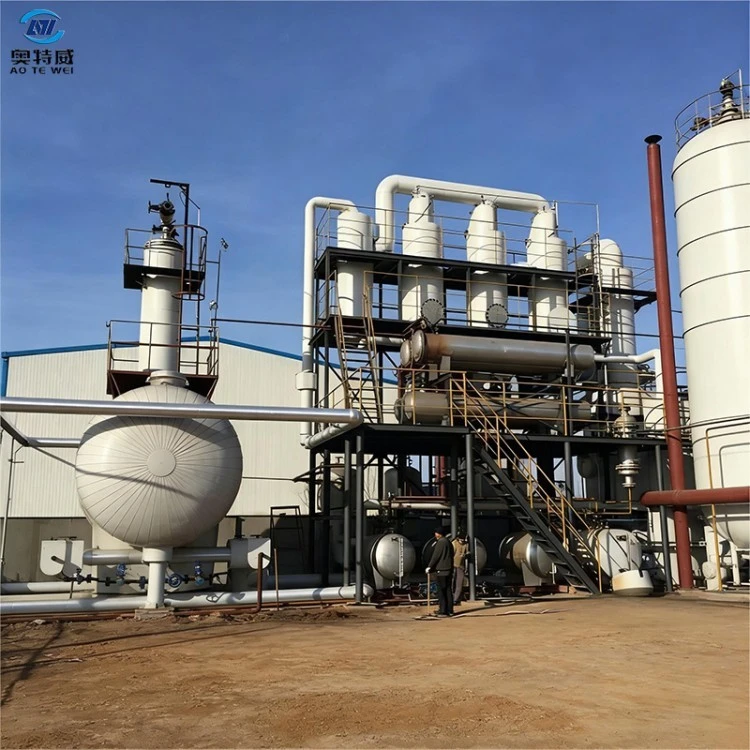
Shangqiu Aotewei Environmental Protection Equipment Co., Ltd. is one of the leading manufacturers and suppliers of lubricant oil refinery plant in China. We are committed to providing high quality customized products with competitive price. If you're going to buy ISO certified lubricant oil refinery plant, welcome to get quotation from our factory.
Product Name
Integrated Waste-Oil-to-Base-Oil Recycling Refinery Unit (Lubricant Oil Refinery Plant). Designed for spent motor oils and used industrial lubricants, this recycling unit adopts a three-step workflow of pre-processing, high-vacuum molecular distillation and post-treatment refining. It strips away colloidal substances, asphaltene, oxidation by-products and heavy-metal contaminants to yield Grade I and Grade II recycled base stocks. The unit fits recycling ventures focused on waste-lubricant circular economy.
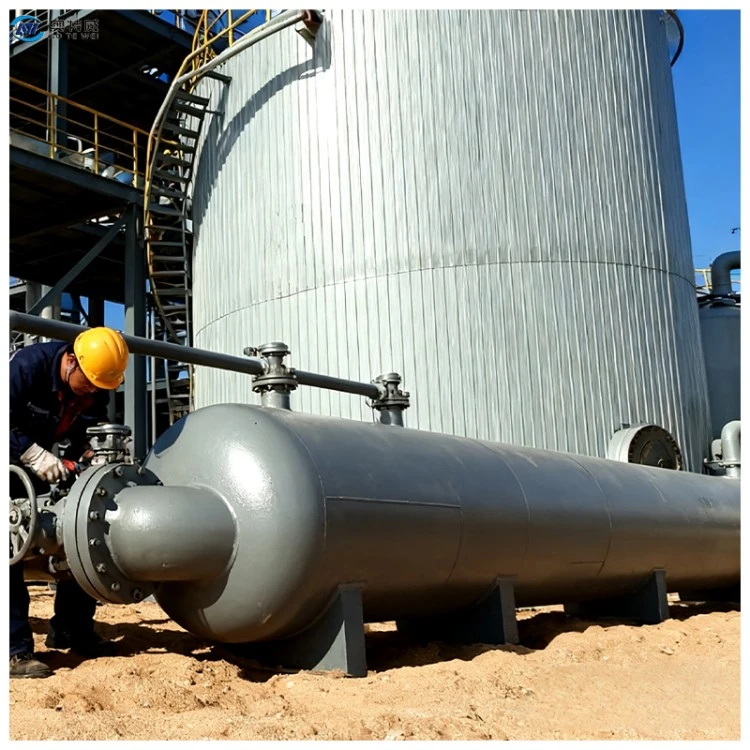
| Key attributes - Vertical Distillation Equipment | ||
| 1 | Attribute | Value |
| 2 | Oil Type | Diesel |
| 3 | Phase | Three Phase |
| 4 | Voltage | Customized |
| 5 | Condition | New |
| 6 | Warranty | 1 Year |
| 7 | Raw Material) | Crude Oil, Used Ship Oil |
| 8 | Place of Origin | Henan, China |
| 9 | Brand Name | AOTEWEI |
| 10 | Name | Distillation Equipment |
| 11 | Advantages | Energy Saving, High Efficiency and Environmental Protection |
| 12 | Color | Customized |
| 13 | Function | Refined waste oil, tire‑derived oil, plastic‑derived oil, kitchen waste oil, etc. |
| 14 | Product Name | Refine equipment |
| 15 | After-sales Service Provided | Online Support |
| 16 | Type | Vacuum Filtration |
Features
Pre-processing impurity elimination module:
This recycling refinery is fitted with combined settling-filtration and degumming-sludge-removal assemblies. It gets rid of solid particles, oil sludge and colloidal contaminants from incoming waste lube ahead of core distillation. This setup lowers fouling and blockage risks inside high-vacuum distillation hardware and safeguards internal molecular-distillation components.
Tiered high-vacuum molecular distillation setup:
Tiered vacuum fractionation technology is deployed. Under low-temperature working circumstances, the system separates feedstock into multiple viscosity-specific cuts. Thermal breakdown of lube constituents is avoided, and the inherent viscosity index of base-stock fractions remains well-preserved.
Nitrogen inert shielding setup:
Nitrogen blanketing fills the process space to isolate atmospheric oxygen. It suppresses oxidative degradation of hot oil streams, helping maintain favorable hue and oxidation resistance for recycled base-oil output.
Hybrid post-treatment upgrading assembly:
Merging clay treatment and adsorptive filtration modules, the unit removes leftover polar contaminants, chromogenic substances and trace acidic compounds. It lifts base-oil flash-point values and anti-oxidation performance to satisfy recycled base-stock quality benchmarks.
Multi-loop PLC automated process platform:
It enables synchronized monitoring for vacuum readings, operating temperature and material viscosity. Distillation parameters auto-adjust responding to feed viscosity variations. Multiple waste-lube process recipes are stored onboard; operators can activate preset parameter groups with one click when switching different incoming waste-oil feeds.
Advantage
Low-heat distillation protects hydrocarbon molecules:
The high-vacuum molecular distillation runs at reduced heating levels for incoming feeds. Base-oil cracking is minimized, finished base stocks suffer minor viscosity loss, and output quality stays consistent batch-to-batch.
Broad feedstock adaptability:
Apart from spent motor oil, gear lubricant and hydraulic fluid, the system can handle mixed waste-oil feeds containing minor fractions of fuel-oil contaminants.

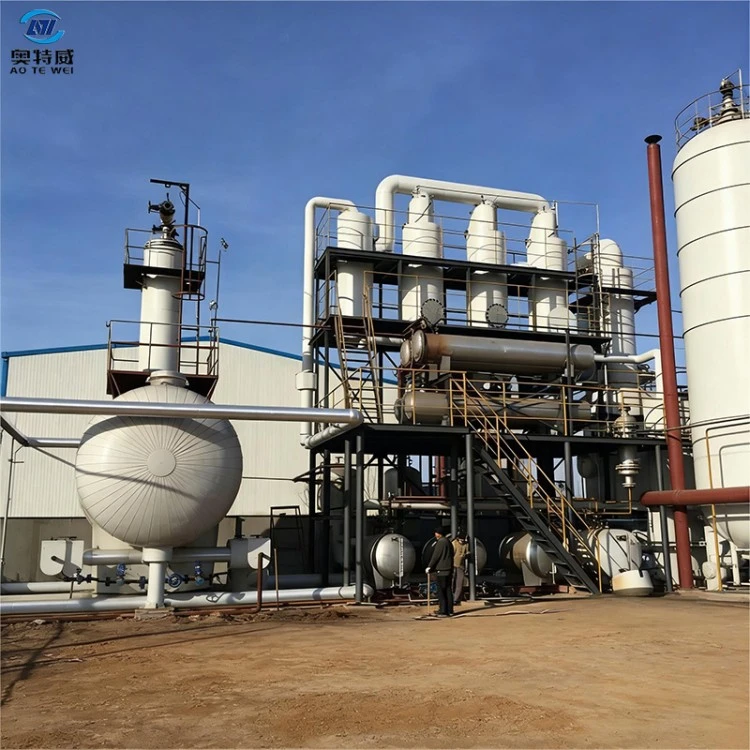
Superior finished-base-stock performance:
Thanks to nitrogen blanketing plus hybrid adsorptive refining workflows, regenerated base stocks feature light color tone and strong oxidation tolerance. Such base-oil products are ready for compounding different commercial lubricant formulations.
Extended runtime with reduced coking risks:
Multi-stage pre-processing for sludge removal cuts down heavy residual substances entering main distillation columns. Longer continuous running hours are realized, and scheduled shutdowns for coke removal become less frequent.
Highly tunable process workflows: Operators can tweak fraction-cutting setpoints according to varying waste-oil qualities. Multiple viscosity-graded recycled base-oil products can be generated to satisfy diverse market requirements.
Application Scenarios
- Centralized waste-lubricant recycling facilities: Gather post-consumer motor oils and industrial spent lubricants from local markets, then produce recycled base-oil in large-batch centralized operations.
- In-plant circular-oil projects for mines and heavy-industry sites: Large-scale factories and mining sites accumulate massive volumes of used hydraulic and gear oils. On-site recycling units enable closed-loop oil reuse within plant premises.
- Base-oil production workshops for petroleum traders: Source waste lubricants from diverse recycling channels, reprocess them into recycled base stocks and supply those products to lube-blending factories.
- Cross-border waste-lubricant recycling initiatives: Modular skid-mounted delivery allows overseas operators to deploy the refinery locally. On-site waste-oil conversion into base-stock reduces expensive long-haul transportation for raw waste-oil cargo.
Packing & Shipping
- Core equipment including molecular distillation assemblies, pre-processing tanks and refining reaction vessels go through anti-corrosion and rust-proof treatments. Dust-proof protective hoods cover every flange and vacuum port. Tall tower segments are fabricated in split sections with reinforced base brackets for secured bare-metal ocean shipment.
- Delicate electrical hardware such as PLC control cabinets, vacuum pumping groups, online viscosity analyzers and sensing transmitters are individually packed within shock-absorbing, moisture-resistant solid timber crates. Shipping labels including "This Side Up", "Keep Dry" and "Fragile" are clearly marked for marine transit.
- Tower internals, adsorbent filter media, sealing gaskets, pipe valves, special maintenance tools and replaceable wear parts are sorted into categorized packages. Each crate comes with its separate item manifest for cargo verification at destination harbors.
- Major equipment assemblies are segmented to match inner dimensions of standard 40HQ shipping containers. Oversized irregular-shaped components are transported via bulk ro-ro vessels. Comprehensive packing manifests are provided and customers may supervise container loading at the factory.
- Complete technical documentation is delivered alongside physical goods: PID flow schematics, equipment assembly blueprints, pressure-vessel inspection reports, operation-maintenance handbooks, spare-part inventories and full customs-clearance paperwork sets.
FAQ
Q1: Is this lubricant recycling refinery capable of handling waste lube mixed with fuel oil fractions?
A: Yes. Most light fuel oil fractions can be separated by front end pre processing workflows. If fuel oil content is excessively high, users are advised to add an extra light fraction stripping procedure to guarantee final base oil quality indicators.
Q2: Are the regenerated base oil outputs directly usable for lubricant compounding work?
A: Base stocks fully treated via distillation plus post refining workflows can be mixed with corresponding additive packages to formulate various industrial lubricants as well as partial motor engine oils.
Q3: What throughput range can this equipment achieve?
A: Standard spec units offer daily processing capacity between 5 tons and 45 tons. Custom tailored designs are available to match clients' actual waste oil handling scale.
Q4: What factors cause dark colored recycled base oil outputs?
A: Common triggers include insufficient vacuum levels, overly long high temperature exposure duration or incomplete sludge elimination in pre processing steps. Equipped with nitrogen shielding and multi step pre treatment, operators can achieve lighter oil color by strictly complying with official operating manuals.
Q5: How long can the unit run continuously before coke removal maintenance becomes necessary?
A: With sufficient feed pre treatment, uninterrupted operation spanning 25 40 days can be achieved. Heavy contaminant loads within incoming feeds shorten service cycles; scheduled sludge discharge maintenance will be required accordingly.
Company Profile & Production Capacity
Our enterprise specializes in developing and building complete recycling refining systems for solid waste and waste-oil streams. Holding pressure-vessel manufacturing licenses and standardized production workshops, we integrate process research, mechanical design, sheet-metal fabrication, whole-unit assembly and commissioning services in-house. We possess rich practical experience for pyrolysis, distillation and refining-system manufacturing, supported by full component-fabrication production lines. Key pressure containers, tower bodies and heat-exchange hardware are all produced within our own facilities. Custom-tailored process layouts can be offered according to clients' feed properties, site footprint targets and product-quality expectations. Our product portfolio covers pyrolysis units, crude-oil distillation lines, waste-oil refining plants, lube-oil recycling systems and vegetable-oil refining equipment. Our machinery has been exported across multiple global regions. For overseas buyers, we supply one-stop solutions including full-scope process packages, equipment fabrication and on-site technical assistance.
Hot Tags: lubricant oil refinery plant, China lubricant oil refinery plant manufacturers, suppliers, factory


