

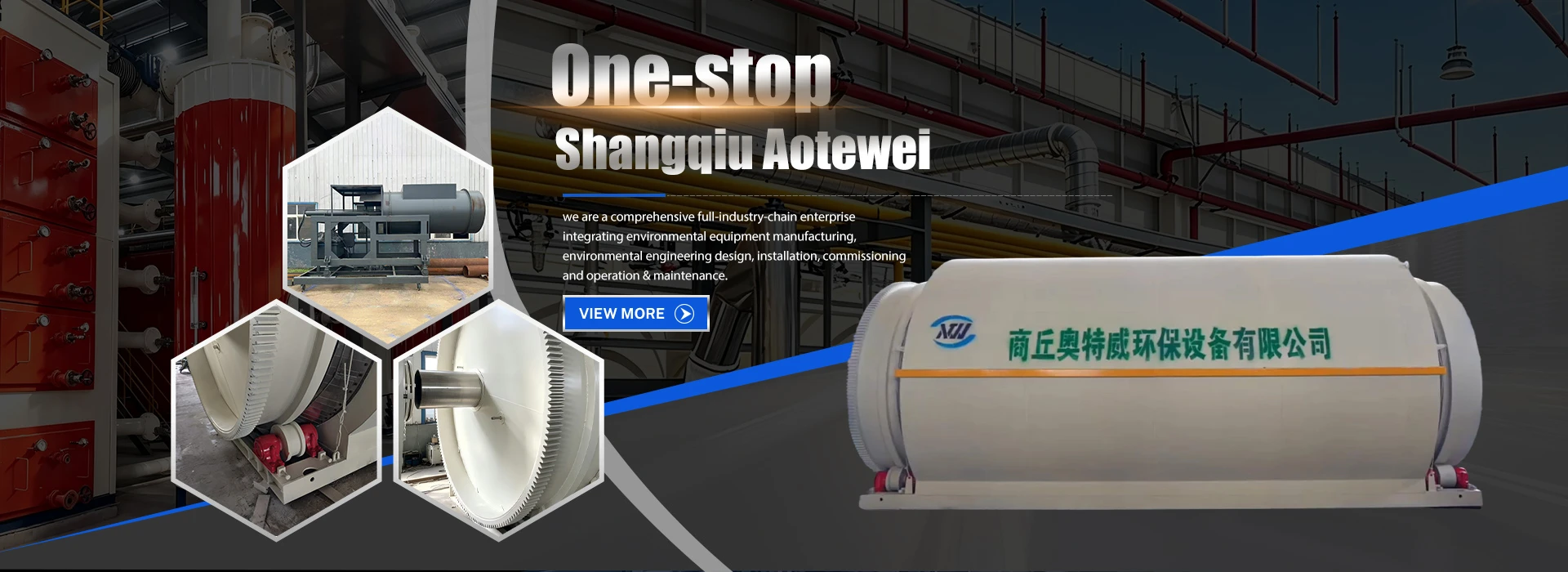
Shangqiu Aotewei Environmental Protection Equipment Co., Ltd. is one of the leading manufacturers and suppliers of high-viscosity oil sludge pyrolysis plant in China. We are committed to providing high quality customized products with competitive price. If you're going to buy ISO certified high-viscosity oil sludge pyrolysis plant, welcome to get quotation from our factory.
High-Viscosity Oil Sludge Pyrolysis Plant
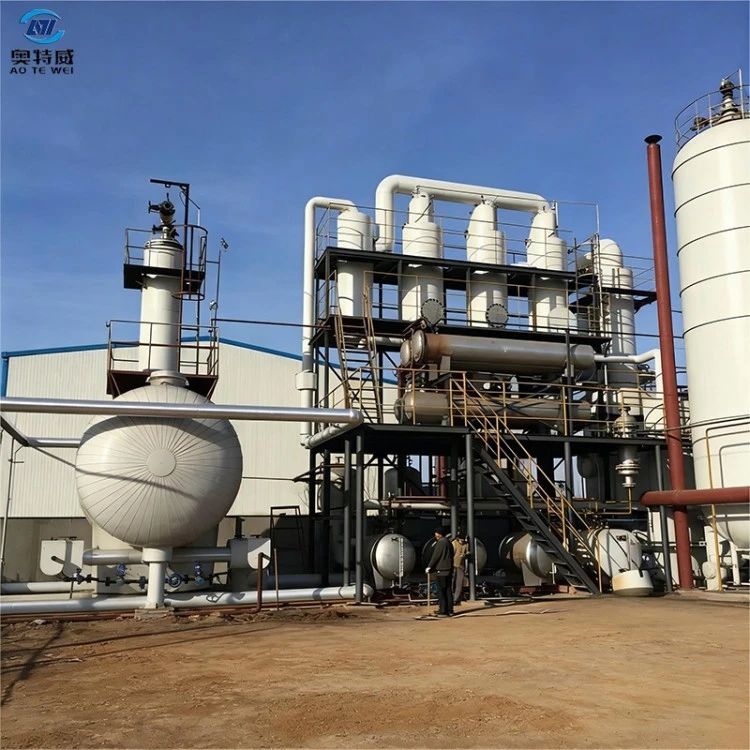
Our High-Viscosity Oil Sludge Pyrolysis Plant is a continuous oil sludge treatment system designed for oilfield sludge, tank bottom sludge, and refinery sludge with high viscosity, moisture, or ash content. With a published reference processing capacity of 30–40 tons per day, the plant integrates jacket-heated screw feeding, multi-stage air-lock sealing, sectional indirect heating, oil-gas condensation and separation, combustible gas recycling, and sealed residue discharge.
For viscous sludge that tends to adhere to feeding equipment or cause blockages, the plant incorporates a jacket-heated screw feeding structure and multi-stage air-lock sealing. Its integrated oil sludge pyrolysis process includes separate dehydration, pyrolysis, and residue calcination sections, followed by oil recovery and solid residue handling.
1. Feedstock Compatibility and Processing Conditions
The plant is designed for three main categories of oily feedstock:
- Oilfield sludge
- Tank bottom sludge
- Refinery sludge
Feedstock preparation is required before continuous processing. High-viscosity sludge needs conditioning before feeding, while stones and large foreign materials should be removed. High-moisture sludge may require preliminary dewatering before entering the thermal processing system.
| Feedstock condition | Processing requirement |
|---|---|
| High-viscosity sludge | Conditioning before feeding; jacket-heated screw feeding structure |
| High-moisture sludge | Preliminary dewatering before thermal processing |
| High-ash sludge | Feedstock assessment and corresponding process configuration |
| Sludge containing stones or large debris | Removal of large foreign materials before feeding |
| Mixed oily sludge | Feedstock testing and engineering assessment before equipment configuration |
Excessively high viscosity can increase feeding torque and affect continuous operation. The allowable viscosity, moisture content, ash content, oil content, and foreign-material size depend on actual feedstock characteristics and the final equipment configuration.
2. Processing Capacity and Equipment Selection
The published reference processing capacity of this continuous oil sludge pyrolysis plant is 30–40 tons per day.
| Selection item | Published specification or condition |
|---|---|
| Processing capacity | 30–40 tons/day |
| Processing mode | Continuous processing |
| Main feedstock | Oilfield sludge, tank bottom sludge, and refinery sludge |
| Feeding system | Jacket-heated screw feeder |
| Feeding seal | Multi-stage air-lock sealing |
| Heating configuration | Sectional indirect heating |
| Thermal processing sections | Dehydration, pyrolysis, and residue calcination |
| Oil recovery | Multi-stage condensation and separation |
| Combustible gas utilization | Recycled to the furnace as a heat source |
| Residue discharge | Sealed discharge with indirect water cooling |
The 30–40 tons/day figure is the published reference capacity, not a guaranteed throughput for every sludge composition. Actual processing capacity depends on feedstock characteristics, preparation conditions, and the final equipment configuration.
3. Continuous Pyrolysis Process and Equipment Configuration
The plant integrates material feeding, thermal treatment, oil-gas recovery, and residue discharge into one continuous oil sludge pyrolysis system.
Jacket-Heated Screw Feeding
The feeding system uses a heated screw structure to handle viscous sludge. Multi-stage air-lock sealing is incorporated into the feeding arrangement to maintain sealed material transfer and limit air entry.
Sectional Indirect Heating
The thermal processing system is divided into three functional sections:
- Dehydration section: Removes moisture from the prepared sludge before the main pyrolysis stage.
- Pyrolysis section: Thermally processes the oily material and generates oil-containing gas.
- Residue calcination section: Further treats the remaining solid material.
Each processing section has independent temperature control, allowing the operating conditions of the different thermal stages to be managed separately.
Oil-Gas Condensation and Separation
Generated oil-containing gas passes through a multi-stage condensation and separation system. The recovered liquid oil is collected through the oil recovery arrangement.
Combustible Gas Recycling
Combustible gas generated during processing is returned to the furnace for use as a heat source.
Sealed Residue Discharge
Solid residue is discharged through a sealed negative-pressure system. Indirect water cooling reduces residue temperature before discharge.
Exhaust Gas Treatment
The plant includes supporting exhaust gas purification equipment for treating combustion exhaust before discharge. The final treatment configuration and applicable emission requirements are determined according to project conditions and local regulations.
4. Automation and Operating Configuration
The plant uses a DCS monitoring and control system for centralized process supervision.
| Monitoring or control function | Configuration |
|---|---|
| Feeding torque | Real-time monitoring |
| Furnace temperature | Sectional monitoring |
| Internal furnace pressure | Real-time monitoring |
| Oil-gas output flow | Real-time monitoring |
| Excessive feeding torque | Interlocked shutdown protection |
| Excessive temperature | Interlocked shutdown protection |
| Excessive pressure | Interlocked shutdown protection |
| Operating interface | Local operation and remote status monitoring |
| Centralized control | DCS monitoring system |
The published operating arrangement requires 2–3 operators per shift for central monitoring and field inspection. Additional personnel are required for sludge conditioning and pretreatment operations.
5. Customized Equipment Options
Oil sludge pyrolysis equipment configuration can be adjusted according to feedstock properties, processing capacity, and project requirements.
| Customization item | Available configuration |
|---|---|
| Main reactor | Reactor dimensions can be adjusted |
| Condensation system | Condenser configuration can be adjusted |
| Automation | Different control levels can be configured |
| Exhaust gas treatment | Enhanced exhaust gas treatment option |
| Liquid-level monitoring | Optional liquid-level monitoring components |
| Mixed sludge processing | Feedstock testing followed by project-specific engineering design |
Project configuration is based on feedstock composition, daily processing requirements, local emission standards, available plant space, and investment budget.
6. Manufacturing, Inspection and Export Delivery
As an oil sludge pyrolysis equipment manufacturer, the company's manufacturing process covers material cutting, welding, machining, equipment assembly, and complete machine trial operation.
The company's manufacturing and inspection capabilities include:
- Automatic submerged arc welding for pressure-bearing main reactors.
- Ultrasonic nondestructive testing of weld seams.
- Hydrostatic and pneumatic sealing tests for reactors, condensers, and gas storage tanks.
- CNC cutting, plate rolling, machining, and equipment assembly.
- Complete equipment trial operation before delivery.
For international projects, equipment is divided into functional modules according to transportation dimensions. Standard modules can be arranged for 40HQ container shipment, while oversized components can be shipped by breakbulk vessel.
Export preparation includes:
- Protective blind plates for flanges.
- Anti-rust grease for threaded connections.
- Reinforced waterproof wooden cases for precision instruments.
- Separate wooden packaging for spare parts and tools.
- Anti-corrosion primer and two layers of weather-resistant topcoat for steel structures.
Available trade terms include EXW, FOB, and CIF.
Project documentation can include packing lists, equipment dimension and weight schedules, general arrangement drawings, civil construction drawings, and process flow diagrams.
7. Installation and Technical Support
Project support services include:
- Equipment installation guidance.
- Commissioning assistance.
- Operator training.
- Remote technical support.
- Spare parts support.
- Logistics coordination and export documentation.
The company also provides environmental engineering design, installation, commissioning, and operation and maintenance services.
The final scope of on-site support and service arrangements is established according to the project location and supply agreement.
8. Request a Project Configuration and Quotation
To obtain a configuration proposal for your high-viscosity oil sludge treatment project, send us your available feedstock specifications, laboratory analysis, sample photographs, or estimated daily processing quantity.
Our engineering team can use these details to assess feedstock preparation requirements, review the 30–40 tons/day reference configuration, and develop an oil sludge pyrolysis equipment proposal covering the feeding system, thermal processing sections, oil recovery, residue discharge, and exhaust gas treatment.
Send your sludge specifications or sample photographs to request a project-specific equipment configuration and quotation.
Hot Tags: high-viscosity oil sludge pyrolysis plant, China high-viscosity oil sludge pyrolysis plant manufacturers, suppliers, factory


