
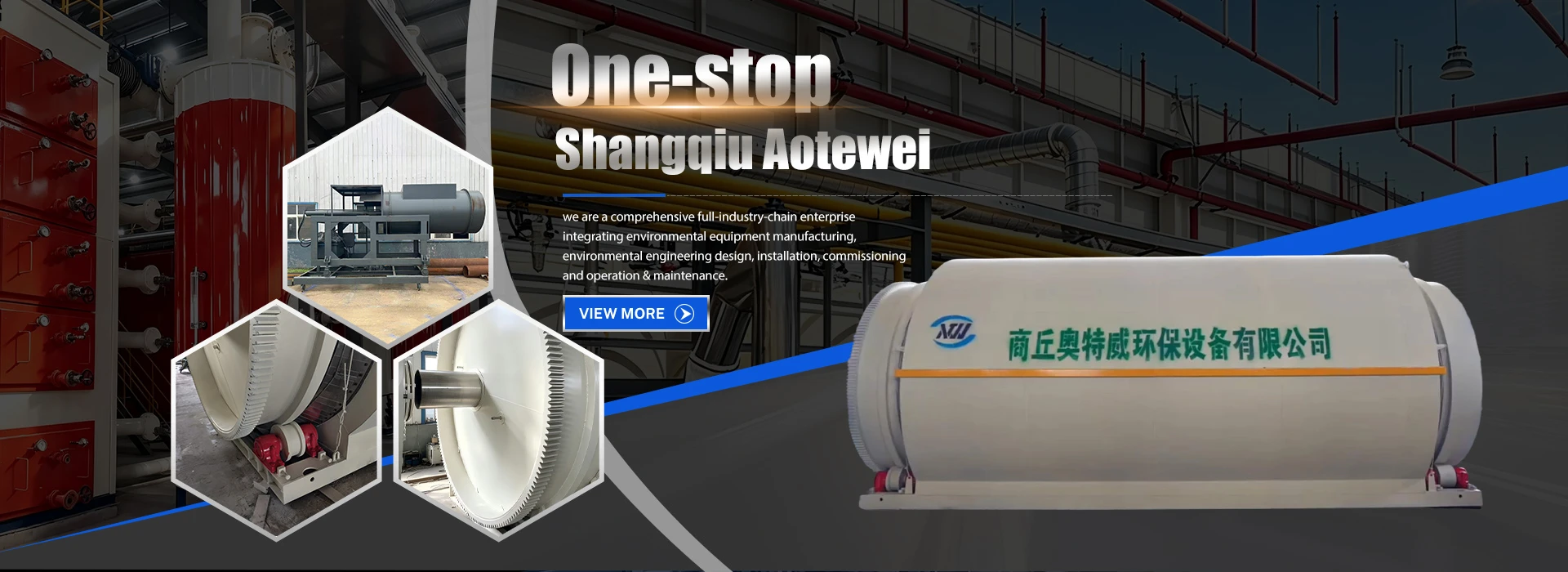
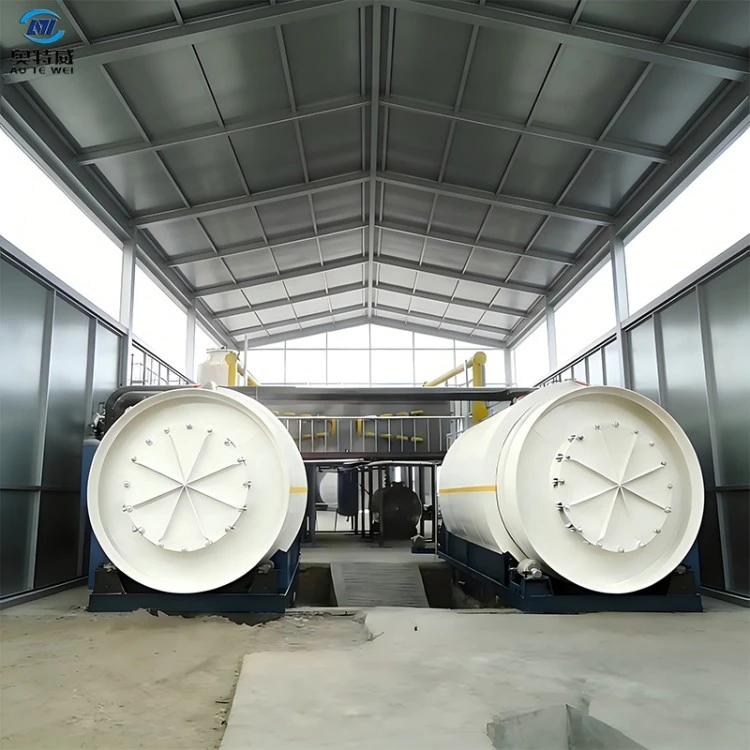
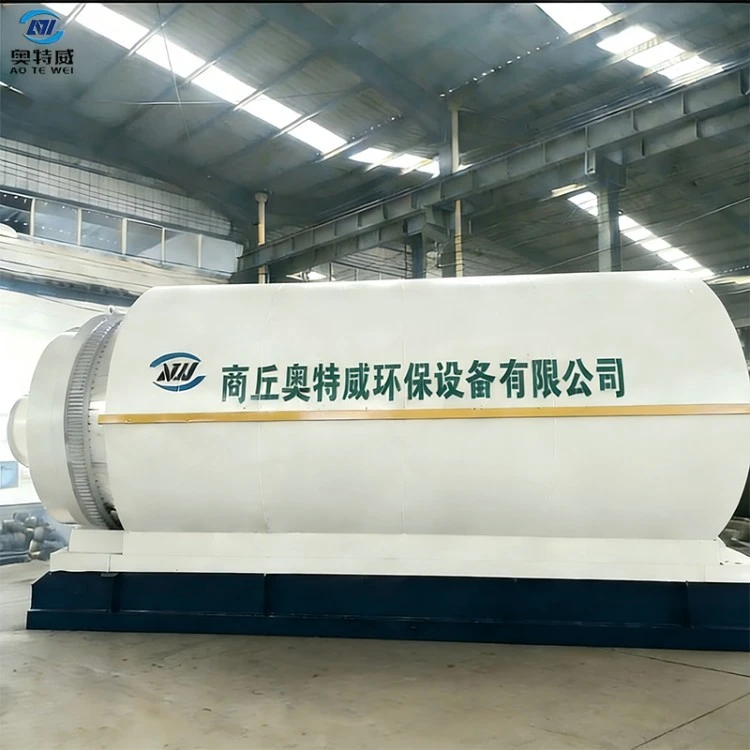
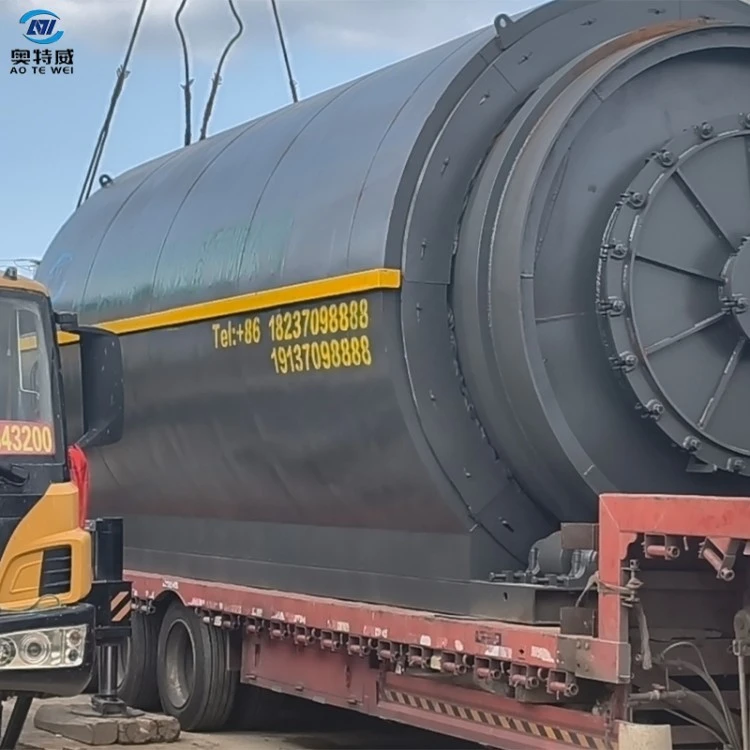
Shangqiu Aotewei Environmental Protection Equipment Co., Ltd. is one of the leading manufacturers and suppliers of tire pyrolysis equipment in China. We are committed to providing high quality customized products with competitive price. If you're going to buy ISO certified tire pyrolysis equipment, welcome to get quotation from our factory.
Products Description
Industrial-Grade Tire Pyrolysis Equipment
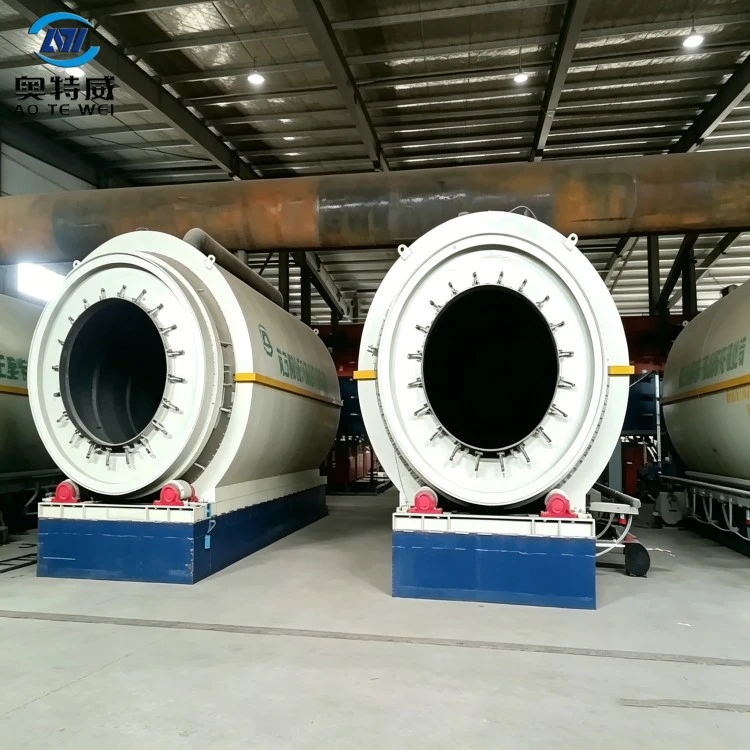
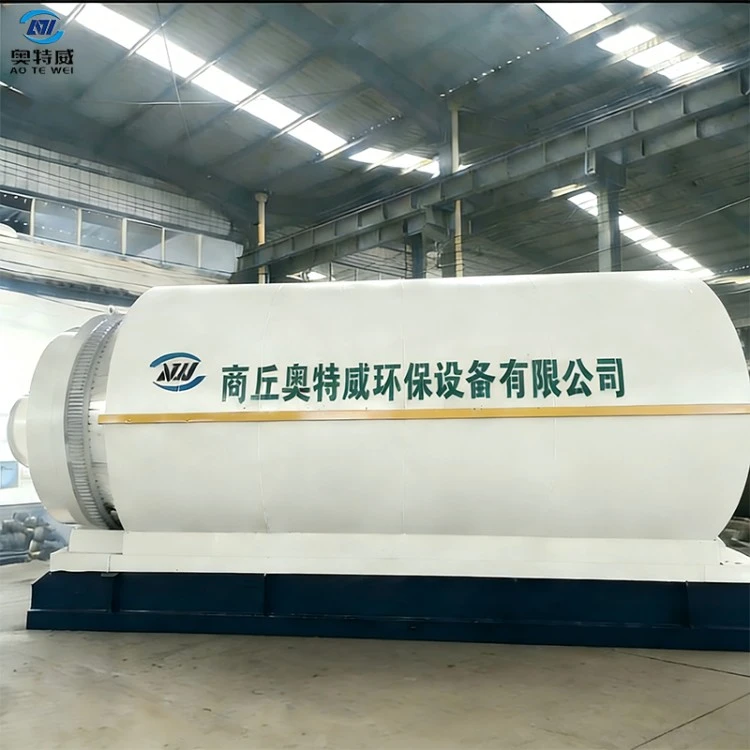
Industrial-Grade Tire Pyrolysis Equipment is an industrial batch-type pyrolysis production line developed by Shangqiu Aotewei Environmental Protection Equipment Co., Ltd. for large-scale waste-tire resource recovery. Its single-batch processing capacity ranges from 5 tons to 20 tons. It adopts a horizontal-rotating girth-gear drive structure, equipped with a large-volume cooling system and multi-stage tail-gas purification & recovery device. It can efficiently convert waste tires into fuel oil, carbon black and steel wire. Suited for recycling-resource enterprises with stable waste-tire supply pursuing large-scale profits, it serves as the mainstream unit balancing production capacity and reliability within the tire-pyrolysis industry.
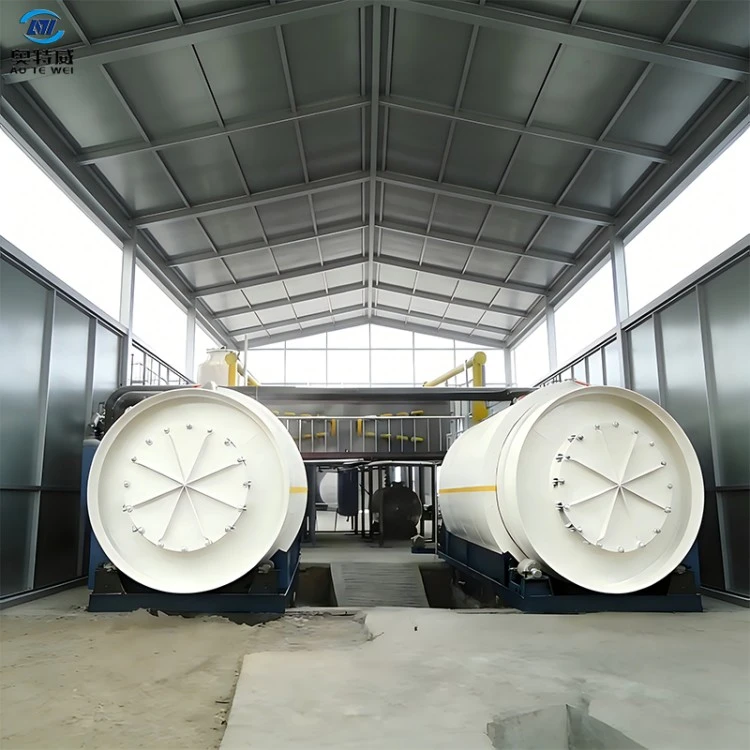
| Technical Parameter of the Pyrolysis plant | |||
| 1 | Suitable Raw Materials | Rubber/Plastic Products etc | Rubber/Plastic Products etc |
| 2 | Structure | Horizontal Rotation Type | Horizontal Rotation Type |
| 3 | Reactor Size | φ2600×6600mm φ2800×8000mm φ3000×8800mm |
φ1500×2000mm φ1800×4000mm φ2000×600mm |
| 4 | Capacity for One Batch | 8-10Mt; 12-15Mt; 18-20Mt | 1Mt; 3Mt; 5Mt |
| 5 | Oil Yield from Tyres | 38%~45% | 38%~45% |
| 6 | Work Pressure | Normal Pressure | Normal Pressure |
| 7 | Reactor Rotation Speed | 0.4R/M | 0.4R/M |
| 8 | Fuels Choice | Coal, Wood, Gas, Oil | Coal, Wood, Gas, Oil |
| 9 | Power | 15~22kw/h | 8~15kw/h |
| 10 | Cooling Method | Cycling Water | Cycling Water |
| 11 | Type of Drive | External Annular Gear | External Annular Gear |
| 12 | Heating Method | Direct Heating | Direct Heating |
| 13 | Type of Installation | Without Foundation | With Foundation / Integrated Base |
| 14 | Noise dB (A) | ≤ 85 | ≤ 85 |
| 15 | Operating Mode | Intermittent Operation | Intermittent Operation |
| 16 | Total Weight (MT) | 25~50 | 10~25 |
Features
Large-volume reactor for high per-batch throughput:
Customizable reactor sizes are available to support large-scale shift-based continuous production.
Girth-gear drive for stable & low-noise operation:
An external large girth gear drives reactor rotation, delivering high transmission torque and even force distribution. Operating noise is controlled within 85 dB(A). The girth gear can be replaced separately upon wear, bringing lower maintenance costs compared with roller-friction transmission.
Direct-fired heating for high thermal efficiency:
Direct heating is applied at the furnace bottom. Flames act evenly on the reactor shell via the combustion chamber. Combined with internal spiral agitators stirring materials, heat-transfer efficiency is improved, pyrolysis temperature stays uniform, and coking & reduced oil yield caused by local over-heating are avoided.
Large-capacity circulating-water cooling for sufficient condensation:
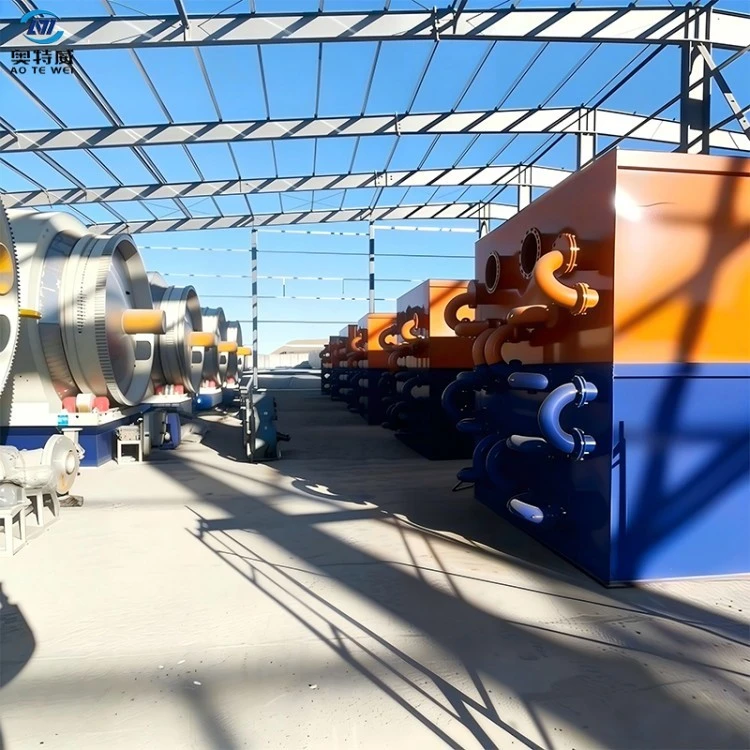
The cooling water tank is fitted with hot-dip galvanized heat-exchange tubes and adopts a double-inlet & double-outlet water-circuit design, with its outer shell reinforced by double channel steel. It provides ample heat-exchange area. Pyrolysis oil-gas achieves high liquefaction rate after multi-stage condensation, minimizing light-component loss and securing stable fuel-oil recovery rate.
Steam drum for pressure buffering & efficient gas-liquid separation:
The system is fitted with a 900×1800 mm steam distribution drum with 8 mm plate thickness. Its inclined bottom opening facilitates ash cleaning and later-stage maintenance. It effectively buffers oil-gas pressure fluctuation, realizes preliminary gas-liquid separation and protects stable operation of downstream condensation units.
Advantages
20+-year industry experience with proven mature technology:
Aotewei has engaged in R&D and manufacturing of waste-tire pyrolysis equipment since early 2000s after multiple generations of product iteration. Key indicators including reactor service life, oil yield and sealing performance have been verified by thousands of production batches.
Full-process in-house manufacturing for guaranteed quality:
Core procedures ranging from Q345R pressure-vessel steel-plate procurement, plate rolling & forming, submerged-arc automatic welding, to hydrostatic pressure test and non-destructive testing are completed inside our own workshop. Welding records and inspection reports are issued for every reactor to eliminate quality risks brought by outsourced assembly.
Split-type supporting rollers: grease replenishment only every 2-3 months:
High-end DN351 split-type supporting rollers adopt built-in dust-proof bearings with a 2-3-month lubrication interval. It prevents scalding hazards and production downtime caused by high-temperature greasing after each batch in standard models, cutting long-term operating-maintenance costs.
Application Scenarios
- Large-scale waste-tire recycling & processing bases: Regional waste-tire distribution centers receiving over 10 tons of waste tires per day can deploy multiple sets of industrial-grade tire pyrolysis equipment running in parallel to conduct massive centralized treatment, converting stockpiled waste tires into saleable fuel oil and carbon black.
- Provincial / municipal hazardous-waste disposal centers: Environmental enterprises undertaking regional hazardous-waste and general industrial solid-waste disposal can adopt tire pyrolysis equipment as the core unit for solid-waste recycling. Integrated into the overall hazardous-waste-treatment system, it brings dual revenue from disposal fees plus product sales.
- Overseas green-field investment projects: Invest and construct industrial-grade tire-pyrolysis plants in Southeast Asia, Africa, the Middle East and other regions with insufficient waste-tire disposal capacity yet fast-growing tire consumption. You may obtain support from local environmental policies while filling market gaps.
- Upstream facility for carbon-black deep-processing industrial chain: Enterprises planning carbon-black grinding, pelletizing and modification deep-processing can build self-owned pyrolysis units to secure stable feedstock of pyrolytic carbon black. It guarantees continuous feeding for downstream deep-processing lines and lifts overall industrial-chain profit.
Packing & Shipping
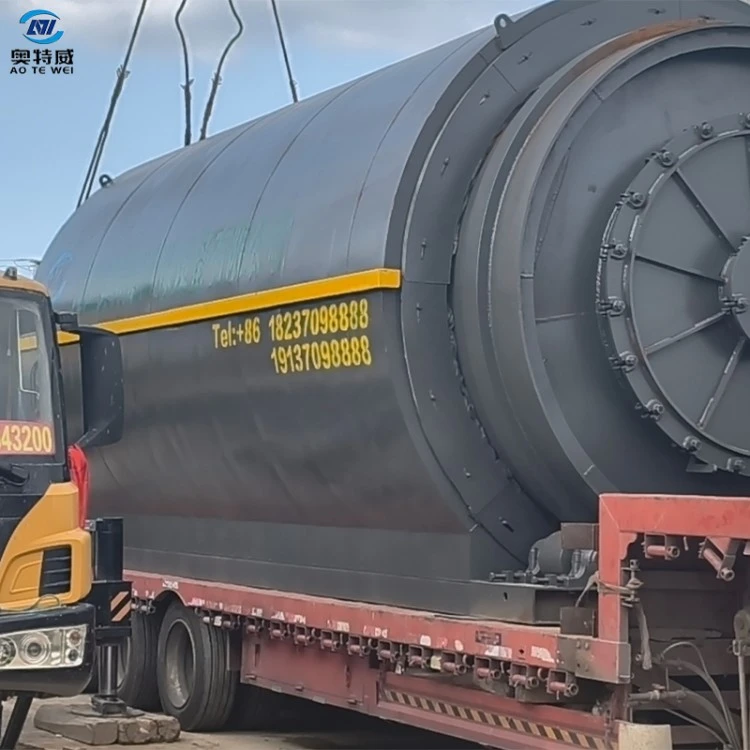
Shipment is executed in split bare-metal packing covered with tarpaulin. Large components such as reactor body, cooling-water tank and base frame are pre-assembled in-workshop before being fixed onto containers or bulk-vessel decks respectively.
Transport is available via 40HQ (40-foot high-cube) container. Detailed packing list, equipment dimension drawings and lifting-point drawings will be provided prior to delivery.
Lead-time for standard configuration is 45 days upon advance-payment receipt; 60 days for high-end version or special customizations. Trade terms including FOB, CIF and EXW are supported. We can assist with ocean-freight booking, cargo-insurance arrangement and destination-port customs-clearance consultation.
FAQ
Q1: How much floor space does industrial grade tire pyrolysis equipment require?
A: Taking φ2800×8000 mm model (12 15 tons per batch) as an example, the main unit zone together with cooling system, oil tanks and operating passage needs workshop area of approx. 15 m × 8 m with minimum ceiling height of 6 m. If raw material stacking and finished goods warehouse are included, total plant area of no less than 1000 m² is recommended.
Q2: How many tons of waste tires can one unit process per day?
A: Single batch throughput depends on reactor dimension. The standard version cycle lasts approx. 26 28 hours while high end version takes 22 23 hours, basically realizing one full production batch per day.
Q3: Do waste tires need pre shredding?
A: Whole tires can be fed directly into the reactor. Nonetheless, it is recommended to equip a tire cutter to slice large size tires (e.g. OTR tires, truck tires) into strips or blocks for better charging density and even pyrolysis. Small passenger car tires can be loaded as is. We can supply tire cutters and hydraulic feeders as optional accessories.
Q4: How to handle output carbon black and steel wire?
A: After pyrolysis completion, residual carbon black and steel wire inside the furnace are discharged via screw discharger. Steel wire can be pulled out by winch and sold directly to scrap recycling stations. Carbon black can be sold in bulk to rubber goods factories or cement plants. It can also be further processed into fine carbon black with matching grinding equipment for higher selling price.
Q5: How many operators are required for equipment operation?
A: 3 4 staff are needed for normal production of one production line: 1 main operator monitors & records temperature and pressure; 1 2 workers manage feeding & discharging; 1 worker takes charge of fuel feeding and equipment inspection. Featuring fair automation, ordinary workers can operate independently after around one week training.
Company Profile & Manufacturing
Shangqiu Aotewei Environmental Protection Equipment Co., Ltd. is located in Shangqiu City, Henan Province. We are an environmental-equipment enterprise specializing in R&D, manufacturing and export of pyrolysis recycling equipment for waste tires, waste plastics and waste rubber.
Our factory owns modern standardized workshops fully equipped with heavy-duty plate-rolling machines, automatic submerged-arc welders, CNC flame-cutting machines, overhead-crane hoisting systems and non-destructive-testing instruments, with annual output capacity of over 100 sets of various pyrolysis plants.
Our core team accumulates more than 20 years of foreign-trade and equipment-manufacturing experience. Our products are exported to dozens of countries and regions including Russia, Nigeria, the United States, Haiti, Burkina Faso, Guinea, Myanmar, Iraq, Mongolia, Oman, South Africa, the Philippines, Benin, Botswana, earning stable customer groups and sound brand reputation across the global waste-tire-pyrolysis sector. Beyond supplying equipment, we deliver complete one-stop solutions covering project feasibility study, process design, plant-layout planning, installation-commissioning and operational training.
Regarding production quality-control, Aotewei strictly implements quality-management-system standards. Weld seams of every reactor undergo ultrasonic non-destructive testing. Each complete unit passes hydrostatic-pressure test and trial-run before shipment to guarantee welding integrity and structural safety. Holding independent import-&-export qualifications, our company can independently finish customs declaration, commodity inspection, certificate-of-origin application, freight booking and all other export-related procedures, providing overseas clients with efficient and reliable delivery services.
Hot Tags: tire pyrolysis equipment, China tire pyrolysis equipment manufacturers, suppliers, factory


