

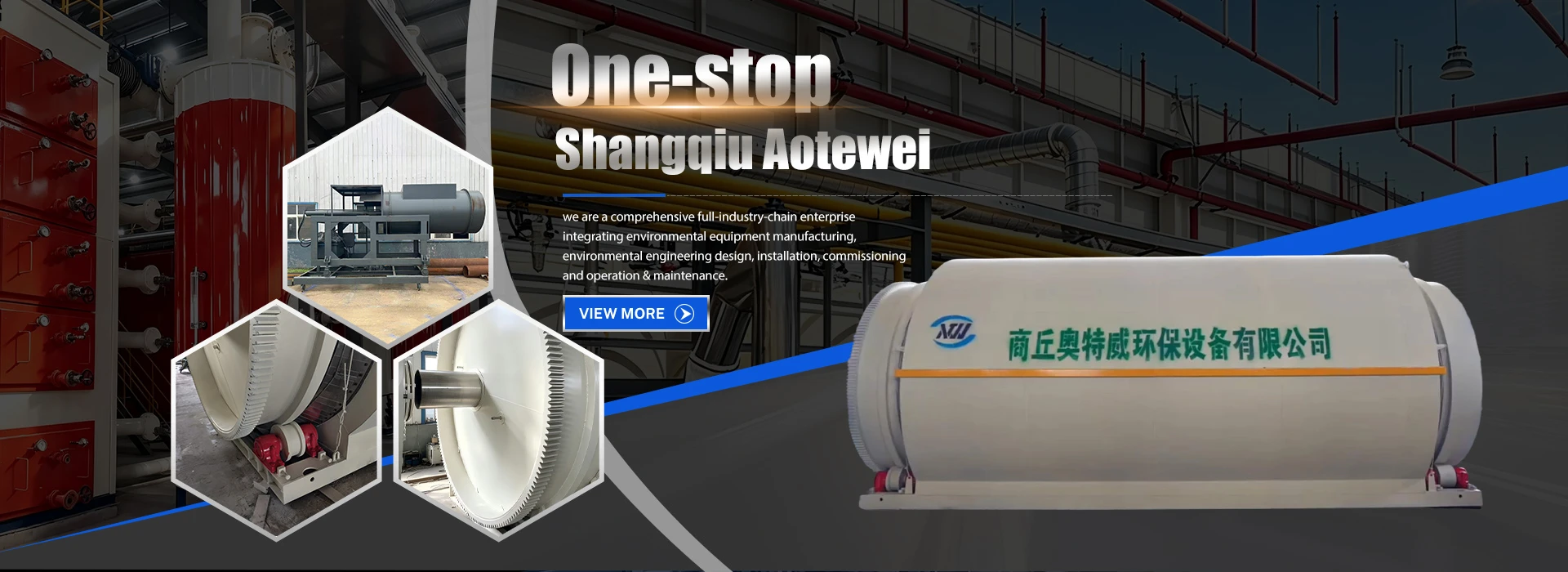
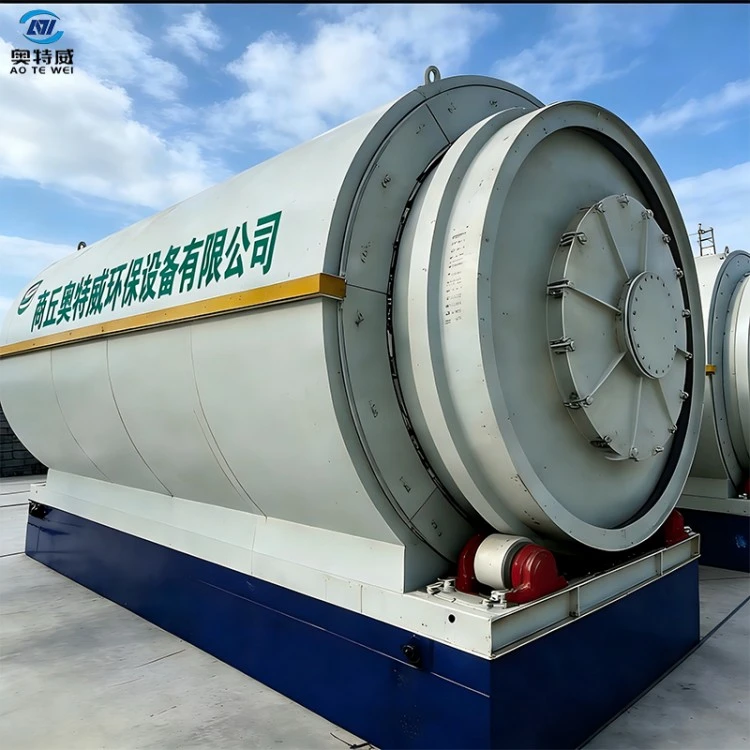
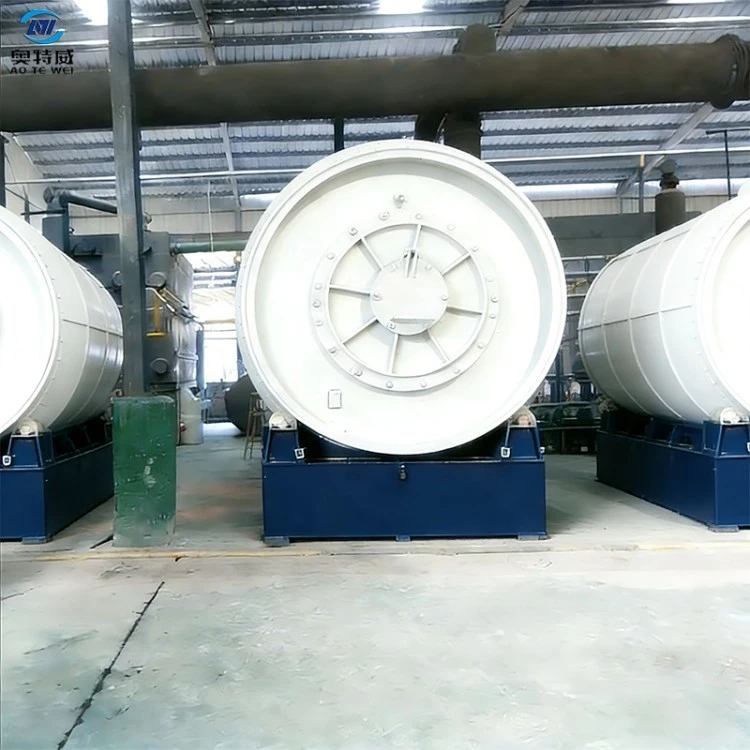
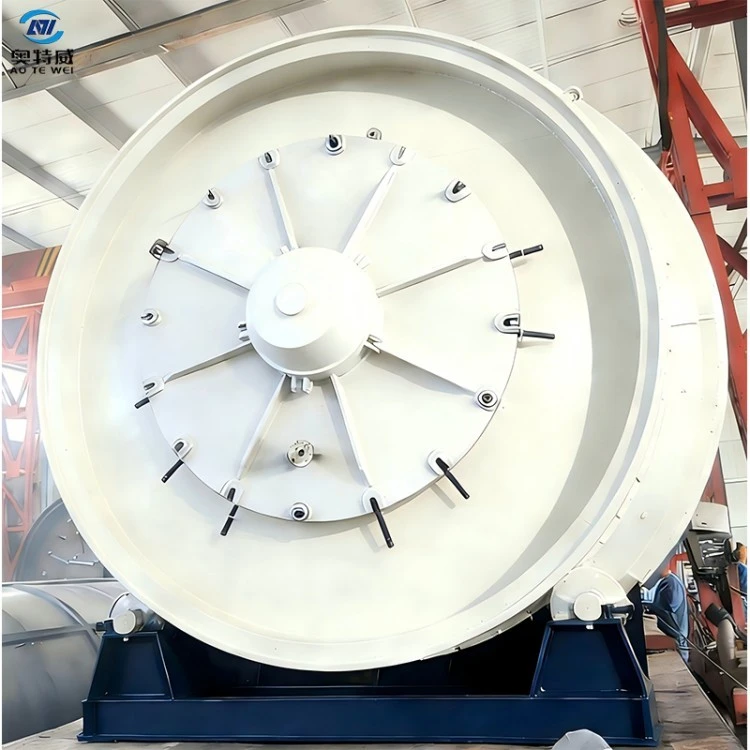
Shangqiu Aotewei Environmental Protection Equipment Co., Ltd. is one of the leading manufacturers and suppliers of waste rubber pyrolysis plant in China. We are committed to providing high quality customized products with competitive price. If you're going to buy ISO certified waste rubber pyrolysis plant, welcome to get quotation from our factory.
Products Description
Waste Rubber Pyrolysis Plant
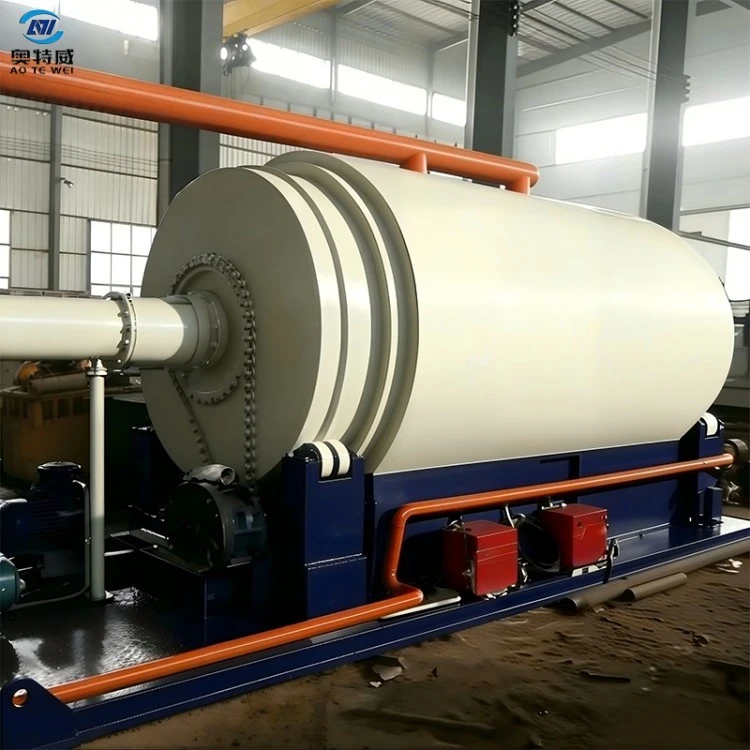
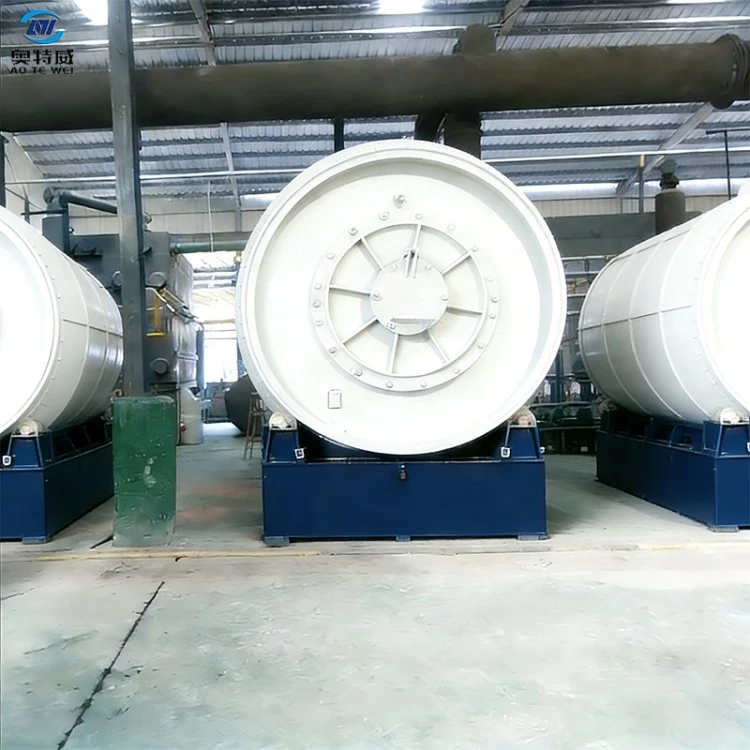
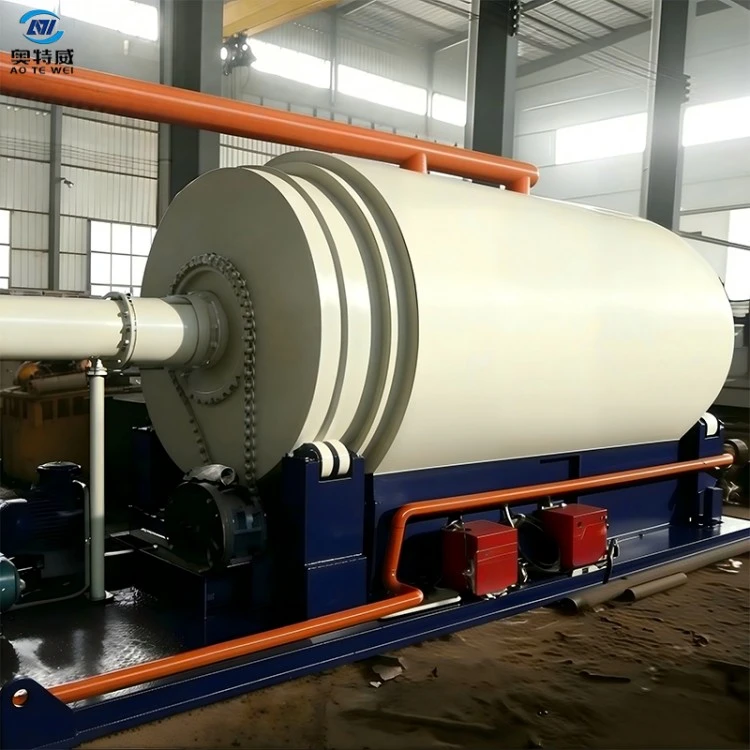
Waste Rubber Pyrolysis Plant is a complete intermittent horizontal-rotary pyrolysis unit launched by Shangqiu Aotewei Environmental Protection. It mainly processes various steel-wire-free waste rubber materials, including rubber scraps, rubber hoses, rubber belts, rubber shoe soles, rubber mats, waste sealing rings and rubber-product off-cuts, with single-batch capacity of 5-15 tons. Under sealed oxygen-free conditions, the plant pyrolyzes waste rubber into fuel oil, carbon black and small-volume combustible non-condensable gas. It helps rubber-processing factories and resource-recycling enterprises dispose of rubber waste, converts waste rubber into saleable energy and chemical raw materials, and realizes harmless treatment and resource utilization of rubber solid waste.
| Technical Parameter of the Pyrolysis plant | |||
| 1 | Suitable Raw Materials | Rubber/Plastic Products etc | Rubber/Plastic Products etc |
| 2 | Structure | Horizontal Rotation Type | Horizontal Rotation Type |
| 3 | Reactor Size | φ2600×6600mm φ2800×8000mm φ3000×8800mm |
φ1500×2000mm φ1800×4000mm φ2000×600mm |
| 4 | Capacity for One Batch | 8-10Mt; 12-15Mt; 18-20Mt | 1Mt; 3Mt; 5Mt |
| 5 | Oil Yield from Tyres | 38%~45% | 38%~45% |
| 6 | Work Pressure | Normal Pressure | Normal Pressure |
| 7 | Reactor Rotation Speed | 0.4R/M | 0.4R/M |
| 8 | Fuels Choice | Coal, Wood, Gas, Oil | Coal, Wood, Gas, Oil |
| 9 | Power | 15~22kw/h | 8~15kw/h |
| 10 | Cooling Method | Cycling Water | Cycling Water |
| 11 | Type of Drive | External Annular Gear | External Annular Gear |
| 12 | Heating Method | Direct Heating | Direct Heating |
| 13 | Type of Installation | Without Foundation | With Foundation / Integrated Base |
| 14 | Noise dB (A) | ≤ 85 | ≤ 85 |
| 15 | Operating Mode | Intermittent Operation | Intermittent Operation |
| 16 | Total Weight (MT) | 25~50 | 10~25 |
Features
Rubber-material-adapted feeding bin for fine rubber-particle charging:
Equipped with an open-top feeding bin specially designed for fine rubber granules and crumb rubber. Fine rubber materials can be fed directly without pre-processing of bulky materials, enabling convenient feeding operations.
Optimized heating & temperature-control system for precise pyrolysis temperature management:
Fitted with independent multi-point temperature-sampling modules for segmented temperature control. It adapts to pyrolysis-temperature curves of different rubber types, prevents excessive rubber cracking and coking, and guarantees stable oil output.
High-efficiency multi-stage condensation system for higher rubber-oil recovery:
Adopting a multi-stage tubular condensation structure optimized for abundant light-weight fractions from rubber pyrolysis. Oil-gas gets fully condensed to reduce gas escape and boost fuel-oil yield.
Sealed negative-pressure operation system to prevent oil-gas leakage:
The whole system runs under slight negative pressure. Both furnace body and pipelines are kept under negative pressure to effectively suppress oil-gas overflow, eliminate odour volatilization on-site and improve workshop working conditions.
Combustible tail-gas recovery & combustion system:
Non-condensable combustible tail gas generated during pyrolysis is collected and guided into the furnace chamber as auxiliary fuel. It partially replaces external fuel and cuts fuel consumption in production.
Advantages
Specially designed for steel-wire-free rubber materials with high production load:
Free from wear-and-tear challenges brought by steel wires, the unit can continuously process fine rubber waste for long runs with low maintenance frequency and higher effective production hours.
Self-burning tail gas for lower operating energy consumption:
Recovered non-condensable combustible gas serves as heat source, reducing procurement of external fuels such as coal, diesel oil and natural gas and lowering project operating costs.
Stable-quality rubber carbon black with low impurity content: Free of steel-wire impurities in raw feedstock, the yielded carbon black features higher purity. It can be directly applied in downstream scenarios like rubber filling and building-material colouring, offering larger profit margin.
Direct processing of fine rubber materials to simplify pre-treatment procedures:
Rubber off-cuts and crushed rubber granules require no further deep processing. They can be fed into the reactor after simple screening, eliminating investment for complex pre-treatment production lines.
Adjustable production cycle to fit multiple rubber feedstocks:
Heating duration and rotating speed can be adjusted according to rubber types. Optimal processing parameters can be achieved for rubber shoe soles, rubber hoses and mixed rubber waste.
Workshop odour control to improve plant operating environment: Full-set negative-pressure sealed design minimizes oil-gas escape. No pungent rubber smoke lingers in the workshop, improving operators' working environment and facilitating environmental-protection inspections.
Application Scenarios
- In-house waste disposal for rubber-goods manufacturers: Rubber production plants generate large volumes of rubber scraps, defective products and waste rubber mats during manufacturing. This plant enables on-site waste consumption and saves high costs for outsourced waste disposal.
- Recycled-rubber recycling enterprises: Recyclers specialized in collecting mixed rubber, used rubber hoses and conveyor-belt scraps conduct pyrolysis treatment on collected rubber waste to gain dual profits from fuel oil and carbon black.
- Waste-treatment projects for labour-protection rubber-product manufacturers: Producers of rubber gloves, rubber shoe soles and rubber sealing rings dispose of end-of-life labour-protection rubber articles and solve the problem of waste stock-piling.
- Centralized solid-waste-disposal unit for industrial parks: For comprehensive industrial parks with waste rubber generated by multiple rubber enterprises, Waste Rubber Pyrolysis Plant conducts centralized disposal and provides waste-treatment services for park-based enterprises.
- Supporting facility for municipal solid-waste sorting centres: Various waste rubber sundries sorted from municipal solid waste are delivered for pyrolysis treatment to achieve volume reduction of municipal rubber-based solid waste.
- Overseas waste-treatment projects for rubber-processing plants: For overseas rubber-goods factories lacking local rubber-waste-disposal channels, investing in pyrolysis equipment allows in-plant waste treatment, and produced fuel oil can be consumed on-site.
Packing & Shipping
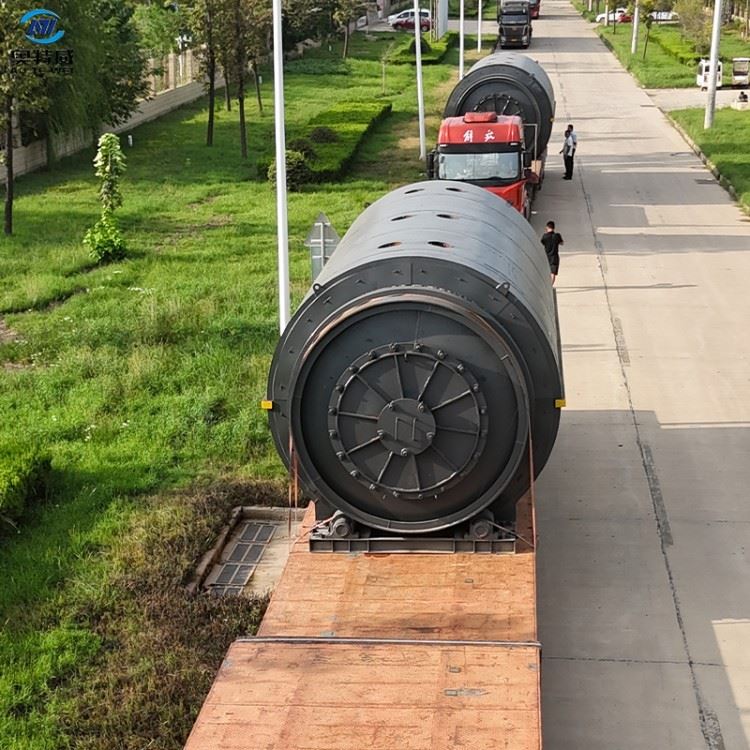
Waste Rubber Pyrolysis Plant is shipped in split bare-metal packages. Rotary reactor, condensation assembly, tail-gas combustion unit, negative-pressure system and driving base are transported separately.
Protective blind plates are installed on all flange nozzles, and thread interfaces are coated with anti-rust grease. Electric-control cabinets and instrument components are wrapped with waterproof film. Small accessories, sealing parts and tools are protected in individual wooden cases. Main equipment surfaces are coated with anti-rust primer and outdoor weather-resistant topcoat.
Standard complete sets fit into 40HQ containers. Extra-large custom-built models are delivered by bulk carrier. Lead-time for standard configuration: 45 days upon receipt of advance payment. Lead-time for customized multi-stage-condensation and high-capacity production lines: 60 days. International trade terms including EXW, FOB and CIF are supported. Packing lists, equipment dimension-and-weight sheets, foundation drawings and lifting-point documents can be provided to facilitate overseas customers' customs clearance, civil-construction work and on-site hoisting.
FAQ
Q1: What are the core differences between waste rubber pyrolysis plant and waste tyre pyrolysis equipment?
A: Waste rubber pyrolysis plant mainly processes steel wire free rubber crumbs, rubber hoses and rubber scraps, with priority given to optimization of condensation recovery and tail gas combustion utilization. Waste tyre pyrolysis equipment focuses on steel wire resistant wear performance and anti clogging pipelines. If feedstock is dominated by rubber scraps, the waste rubber specialized unit is preferred. If large quantities of steel wire containing waste tyres are mixed in, select the tyre oriented model.
Q2: Will caking occur inside the furnace when feeding fine rubber granules?
A: Equipped with rotary stirring reactor that keeps materials tumbling continuously, the plant will not produce caking with rubber crumbs of normal particle size. Ultra fine rubber powder is suggested for simple briquetting before feeding for better production results.
Q3: Can pyrolysis produced carbon black be sold directly?
A: Carbon black yielded from pure rubber waste contains few impurities and can be sold directly to manufacturers of building materials, rubber fillers and pigments. Higher added value can be achieved with supporting grinding and pelletizing equipment for deep processing.
Q4: What are the moisture content requirements for raw materials?
A: Rubber raw materials should be kept as dry as possible. Excessive moisture will prolong heating up time and reduce oil production efficiency. It is recommended to control raw material moisture content within 8 %.
Company Profile & Manufacturing
Shangqiu Aotewei Environmental Protection Equipment Co., Ltd. is located in Shangqiu, Henan Province. We focus on R&D and manufacturing of solid-waste pyrolysis resource-recovery equipment, covering complete pyrolysis plants for waste rubber, waste tyres, waste plastics and oil sludge.
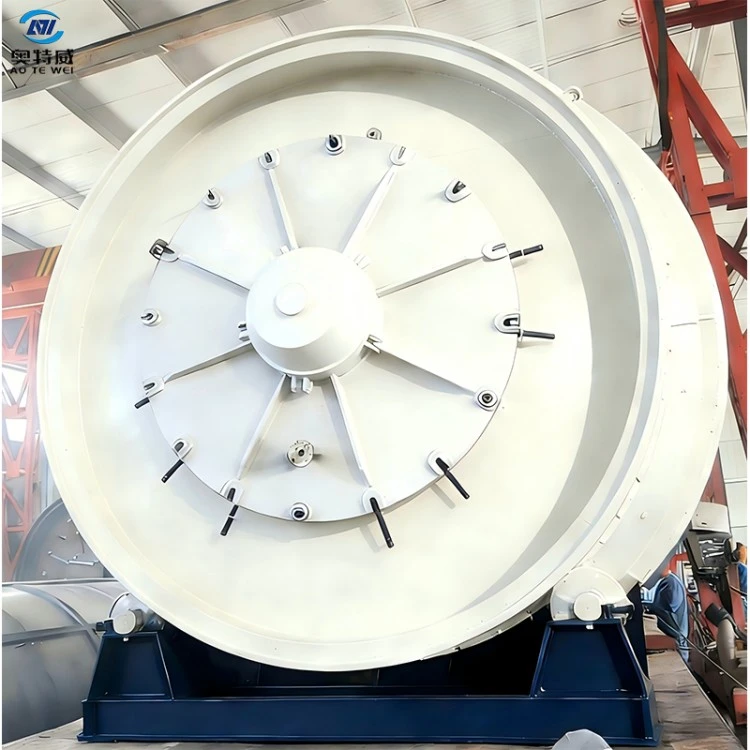
Our factory has standardized production workshops equipped with heavy-duty plate-rolling machines, automatic submerged-arc welders, CNC cutting machines and non-destructive-testing instruments. All processing procedures are completed in-house, with annual output of over 100 complete pyrolysis sets.
With more than 20 years of equipment-export experience, our products are sold across Central Asia, Africa, Southeast Asia, Russia and other regions worldwide. We are familiar with environmental-protection standards, sea-freight-packing specifications and customs-clearance documentation requirements of different countries.
Beyond supplying standalone units, we deliver full-project services including raw-material testing & evaluation, plant-layout planning, civil-engineering foundation drawings, equipment installation-commissioning, operator training and post-operation-maintenance guidance.
For quality control, weld seams of every reactor go through ultrasonic non-destructive testing, and hydrostatic pressure tests are completed before shipment to guarantee reactor safety. Holding full import-&-export qualifications, our company can independently handle customs declaration, certificate-of-origin application and freight booking for full export procedures. Safety stock is maintained for commonly-used sealing components and wearing parts to secure long-term stable operation of customer projects.
Hot Tags: waste rubber pyrolysis plant, China waste rubber pyrolysis plant manufacturers, suppliers, factory


