

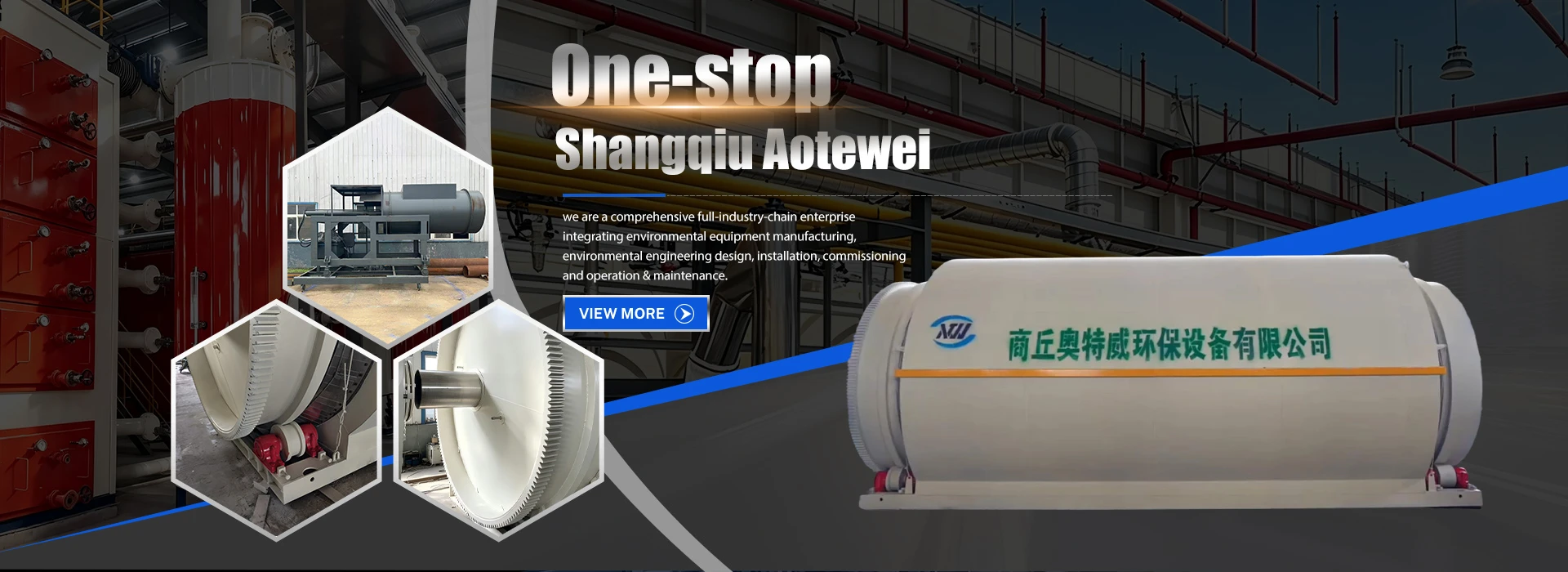
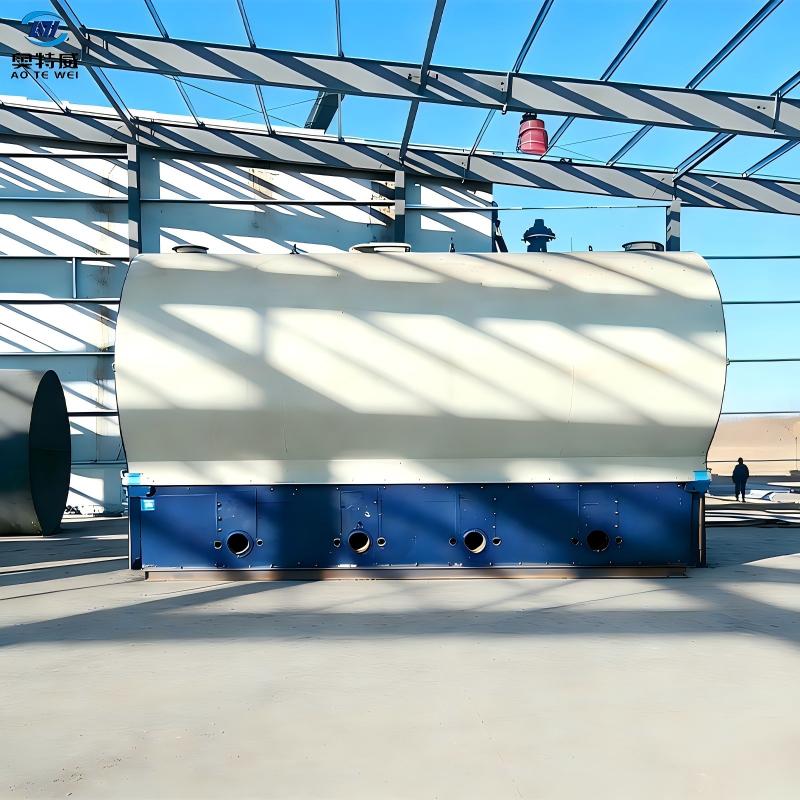
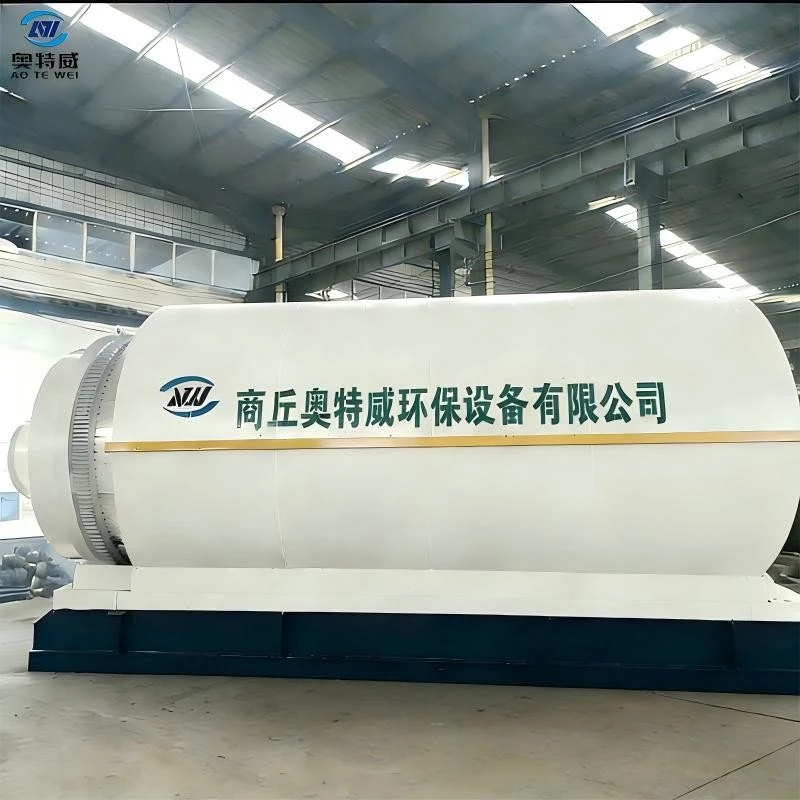
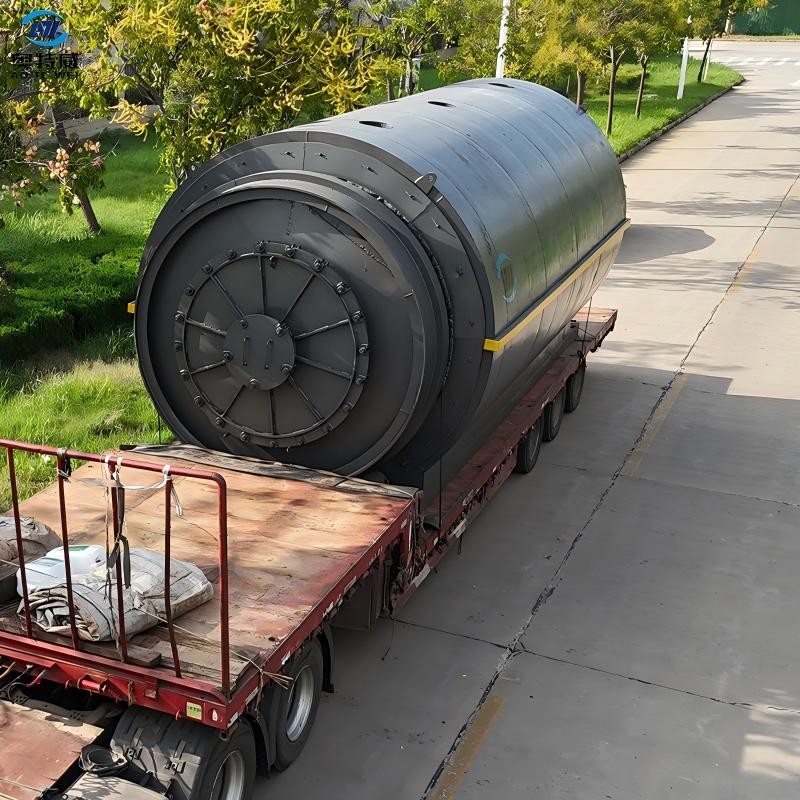
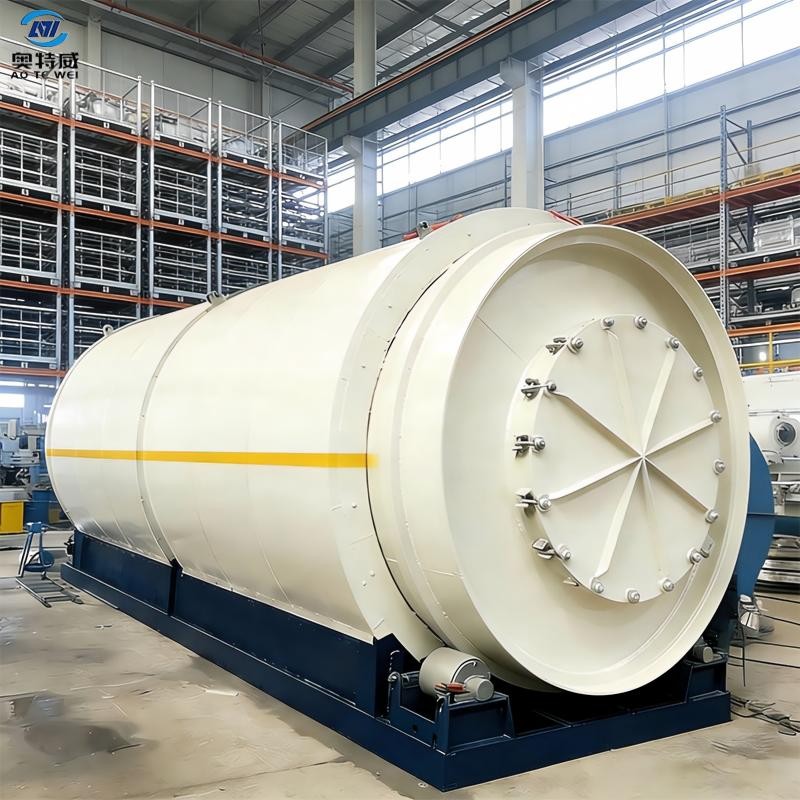
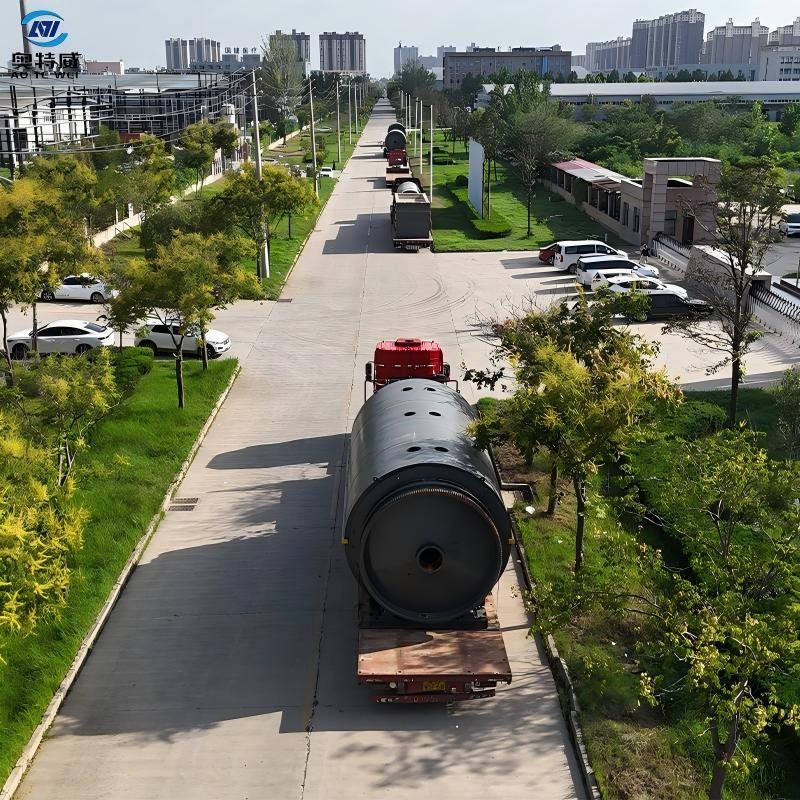
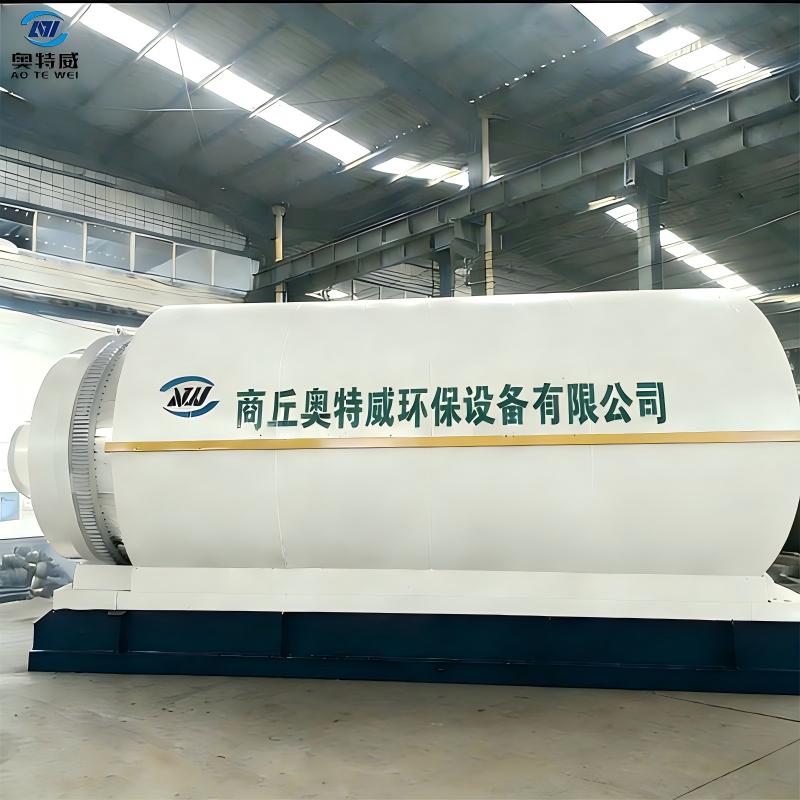
Shangqiu Aotewei Environmental Protection Equipment Co., Ltd. is one of the leading manufacturers and suppliers of waste pyrolysis plant in China. We are committed to providing high quality customized products with competitive price. If you're going to buy ISO certified waste pyrolysis plant, welcome to get quotation from our factory.
Products Description
Waste Pyrolysis Plant
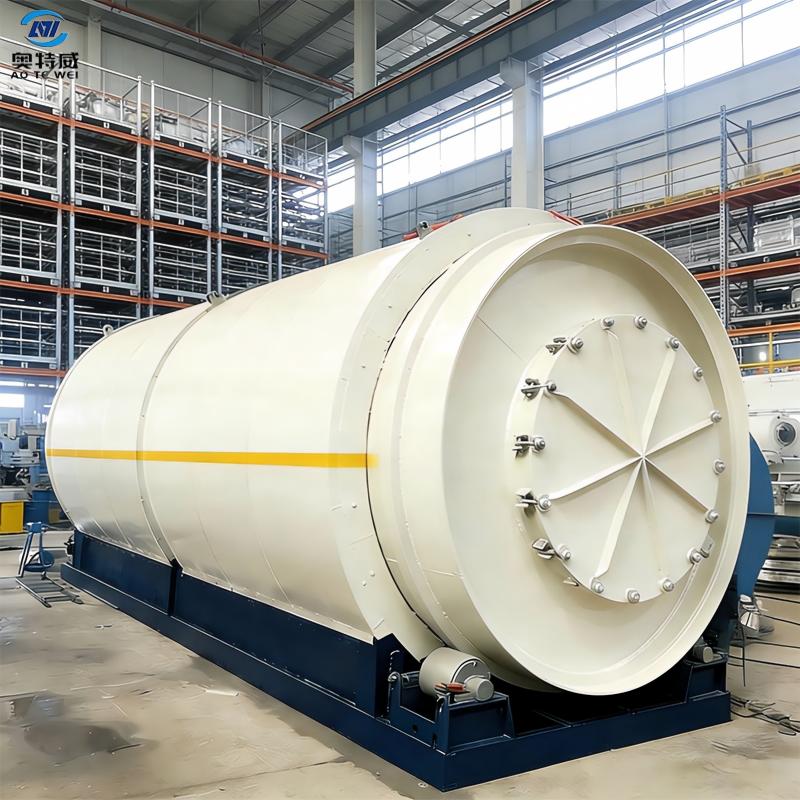
The Waste Pyrolysis Plant is a general-purpose pyrolysis unit developed for the harmless treatment, volume reduction and resource recovery of multi-category solid waste. It adopts flexible low-temperature pyrolysis technology. Capable of processing waste with varied forms and calorific values including industrial hazardous waste, municipal solid waste, agricultural-forestry waste, medical waste and contaminated soil, it converts feedstock into three kinds of products: pyrolysis oil, combustible gas and stabilized residues through oxygen-free pyrolysis, thus realizing harmless disposal and resource utilization of solid waste. Optimized for multi-feedstock compatibility, the plant integrates supporting subsystems such as hazardous-waste pre-treatment, multi-effect flue-gas purification, residue stabilization treatment and explosion-proof safety control. As a core general-purpose equipment for compliant hazardous-waste disposal and circular-economy resource recovery across the solid-waste treatment chain, it is widely applied in hazardous-waste disposal centers, municipal environmental-sanitation departments, industrial enterprises and environmental-protection engineering projects.
Price Note: Quotation is subject to steel-market fluctuation, anti-corrosion configuration, processing capacity and international exchange rates. The reference price for the standard 10-ton-per-day waste pyrolysis plant is USD 54,000 / set (excluding sea freight, import duties and on-site installation & commissioning costs).
| Technical Parameter of the Pyrolysis plant | |||
| 1 | Suitable Raw Materials | Rubber/Plastic Products etc | Rubber/Plastic Products etc |
| 2 | Structure | Horizontal Rotation Type | Horizontal Rotation Type |
| 3 | Reactor Size | φ2600×6600mm φ2800×8000mm φ3000×8800mm |
φ1500×2000mm φ1800×4000mm φ2000×600mm |
| 4 | Capacity for One Batch | 8-10Mt; 12-15Mt; 18-20Mt | 1Mt; 3Mt; 5Mt |
| 5 | Oil Yield from Tyres | 38%~45% | 38%~45% |
| 6 | Work Pressure | Normal Pressure | Normal Pressure |
| 7 | Reactor Rotation Speed | 0.4R/M | 0.4R/M |
| 8 | Fuels Choice | Coal, Wood, Gas, Oil | Coal, Wood, Gas, Oil |
| 9 | Power | 15~22kw/h | 8~15kw/h |
| 10 | Cooling Method | Cycling Water | Cycling Water |
| 11 | Type of Drive | External Annular Gear | External Annular Gear |
| 12 | Heating Method | Direct Heating | Direct Heating |
| 13 | Type of Installation | Without Foundation | With Foundation / Integrated Base |
| 14 | Noise dB (A) | ≤ 85 | ≤ 85 |
| 15 | Operating Mode | Intermittent Operation | Intermittent Operation |
| 16 | Total Weight (MT) | 25~50 | 10~25 |
Features
① Flexible-adaptation pyrolysis process for multi-feedstock compatibility with various solid-waste forms
Equipped with adjustable low-temperature pyrolysis technology targeting differences in calorific value, moisture content and physical forms of various wastes, the plant can handle solid, semi-solid and pasty waste. Its feedstock coverage includes full-range waste categories such as industrial hazardous waste, municipal solid waste, agricultural-forestry waste and medical waste.
② Multi-effect deep flue-gas purification system meeting strict hazardous-waste disposal emission standards
For complex flue gas generated from hazardous-waste pyrolysis, the optional four-stage deep-purification workflow consists of cyclone dust removal, spray scrubbing, activated-carbon adsorption and catalytic combustion. It efficiently removes pollutants including dust, acid gas, heavy metals, dioxins and organic waste gas. Flue-gas readings are far below hazardous-waste incineration emission limits, complying with stringent environmental requirements worldwide and delivering smokeless, odor-free and non-toxic exhaust discharge.
③ Full-process explosion-proof control system for high-safety hazardous-waste-disposal requirements
Full-plant explosion-proof design is adopted for electric-control systems, instruments and valves. The pyrolysis reactor runs under fully-sealed negative-pressure conditions. Multiple safety interlock devices, over-temperature & over-pressure alarms and emergency pressure-relief systems are configured to monitor real-time temperature, pressure and gas concentration. It guarantees fully controllable and secure hazardous-waste pyrolysis and eliminates safety-accident risks.
④ Modular expandable structure for different-scale disposal demands
Featuring standardized modular design, the pyrolysis unit, pre-treatment unit, flue-gas-purification unit and residue-treatment unit can be flexibly combined according to customer's disposal capacity and feedstock types. It suits small-and-medium-scale hazardous-waste projects of 5 tons per-day, and can realize large-scale processing capacity above 50 tons per-day via module parallel connection. Capacity can be expanded flexibly later to match project development at different stages.
Advantages
① Full-range solid-waste compatibility for broad project business coverage
The plant can process nearly all types of solid waste including waste tyres, plastics, rubber, oil sludge, agricultural-forestry waste, medical waste, chemical hazardous waste and contaminated soil. There is no need to replace equipment for different raw materials. Single-set equipment supports multiple solid-waste-disposal businesses, greatly broadening business scope, enhancing market competitiveness and realizing diversified "one-machine-multi-purpose" operation.
② High compliance for hazardous-waste disposal to support hazardous-waste-disposal permit application
Full-process optimization is conducted for environmental-protection and safety requirements of hazardous-waste treatment. Flue-gas-purification systems, residue-stabilization systems and explosion-proof safety systems all comply with national standards and industrial specifications for hazardous-waste disposal.

③ Maximized resource-recovery value for significantly improved comprehensive benefits
Besides converting waste into energy products such as pyrolysis oil and combustible gas, the plant turns hazardous-waste residues into stabilized substances for safe landfilling or further resource utilization through residue-stabilization treatment. It achieves three core objectives for solid-waste management: volume reduction, harmless treatment and resource recovery, and greatly shortens investment payback period.
④ High energy self-sufficiency to substantially cut operating costs
Purified combustible gas generated from waste pyrolysis is fully fed back into the combustion chamber as heating fuel, delivering over 95 % self-sufficiency of heating energy. Only a small amount of external fuel is required for cold-furnace startup. Consumption of coal, natural gas, electricity and other external energy is greatly reduced, effectively lowering routine operating expenses and improving project profit margins.
⑤ Stable long-term operation with low-maintenance cost Core components adopt special high-temperature-resistant, corrosion-resistant and explosion-proof materials, with dedicated optimization for harsh hazardous-waste-pyrolysis working conditions, bringing low failure rate and stable performance. The modular design enables easy replacement of wearing parts with long maintenance cycles and low costs, supporting long-term continuous stable production and consistent project output.
Application Scenarios
- Core equipment for hazardous-waste disposal centers: Serve as core end-of-line facility for professional hazardous-waste-disposal centers to treat various industrial hazardous waste, medical hazardous waste and chemical solid waste. Realize harmless treatment and resource recovery of hazardous waste, assist enterprises in applying for hazardous-waste-operation licenses and carry out compliant hazardous-waste-disposal businesses.
- In-house hazardous-waste-disposal projects for industrial enterprises: Deployed in chemical, pharmaceutical, printing-dyeing, machinery-manufacturing and other hazardous-waste-generating factories to dispose self-produced hazardous waste. It relieves enterprises' compliance pressure for hazardous-waste handling. Recovered energy products can be reused for factory production to cut energy-procurement costs and realize closed-loop in-plant hazardous-waste management.
- Municipal solid-waste comprehensive-disposal projects: Adopted by urban waste-sorting stations and municipal environmental-sanitation authorities to treat municipal solid waste, MSW incineration fly ash, kitchen-waste residues and more. Achieve volume reduction and resource recovery of municipal solid waste and lower landfill volume and overall waste-disposal expenditure.
- Agricultural-forestry waste resource-utilization projects: Used by agricultural authorities and agro-forestry enterprises to process straw, fruit husks, wood chips, livestock manure and other agro-forestry waste into bio-fuel oil and combustible gas. Realize resource utilization of agricultural-forestry waste and support rural revitalization and carbon-neutrality goals.
- Remediation & disposal projects for contaminated soil: Deployed by environmental-engineering and soil-remediation enterprises to treat heavy-metal-contaminated and petroleum-hydrocarbon-contaminated soil. Pollutants in soil are immobilized via pyrolysis-stabilization for harmless disposal and resource recovery of contaminated soil.
- Centralized medical-waste-disposal projects: Applied in centralized medical-waste-treatment facilities to dispose waste generated by hospitals and clinics. Realize harmless treatment and volume reduction of medical waste, prevent infection risks and satisfy environmental-protection and safety requirements for medical-waste handling.
Packing & Shipping
Packing Method:
Major components (pyrolysis reactor, flue-gas-purification tower, pre-treatment unit) are bare-packed with rain-proof and moisture-proof wrapping; transport locking fixtures are pre-installed for direct hoisting and loading. Precision parts including explosion-proof electric-control cabinet, PLC control system, explosion-proof instruments and valves are packed in explosion-proof shock-resistant wooden cases. Loose articles such as pipes, flanges, anti-corrosion gaskets and disassembly-assembly tools are sorted and palletized. Complete bilingual disassembly drawings, operation manuals, explosion-proof safety instructions and packing lists are attached.
Shipping Method:
Sea-export transportation is available. Large-size non-standard equipment can be split for container loading or shipped by bulk carrier. All transport procedures comply with international safety specifications for hazardous-waste-treatment equipment.
Delivery Lead Time:
For standard configurations, production, no-load testing and explosion-proof inspection will be completed within 90-120 working days upon receipt of advance payment. Lead time will be extended correspondingly for customized anti-corrosion and hazardous-waste-oriented configurations. Before shipment, complete explosion-proof inspection reports, environmental-performance test reports, real-site photos and videos will be provided to help customers prepare receiving and commissioning.
FAQ
Q1: What kinds of waste can this plant process? Are there any processing limitations?
A: It can handle most solid and semi solid waste including waste tyres, waste plastics, rubber, oil sludge, agricultural forestry waste, medical waste, chemical hazardous waste, contaminated soil and municipal solid waste. Waste with high concentration strong oxidizing, explosive or radioactive properties is not recommended for direct processing. Customized pre treatment solutions can be formulated for pyrolysis according to waste characteristics.
Q2: Can the plant achieve harmless effects for hazardous waste treatment and pass hazardous waste disposal EIA assessment?
A: It adopts dedicated hazardous waste stabilization pre treatment technology together with four stage deep flue gas purification systems. Heavy metals can be effectively immobilized, toxic substances decomposed and pollutants such as dioxins removed. Leaching toxicity of residues fully meets hazardous waste landfill standards, and flue gas parameters satisfy hazardous waste disposal environmental requirements worldwide. Full technical documentation and third party test reports can be provided to assist customers in EIA approval and permit application.
Q3: What safety protection measures are equipped during equipment operation? Can safety accidents be avoided?
A: Full plant explosion proof design is implemented for all electrical components. The pyrolysis system works under fully sealed negative pressure conditions, equipped with over temperature & over pressure alarms, emergency pressure relief, real time gas concentration monitoring and multiple safety interlock devices. Abnormal working conditions can be early warned and handled timely to fundamentally prevent explosion, leakage, poisoning and other safety hazards and guarantee safe and controllable equipment operation.
Q4: Can produced pyrolysis oil and combustible gas be used directly? Do residues require subsequent treatment?
A: Generated pyrolysis oil can be directly used as fuel oil for industrial boilers, kilns and generators. It can also be further processed into diesel or gasoline with additional distillation and refining equipment. Combustible gas can directly heat the plant or be stored for other on site energy demands. Pyrolysis residues, after stabilization treatment, can be safely landfilled or reused as building material raw materials or road bed fillings for resource recovery.
Q5: What auxiliary facilities are required for plant operation?
A: Required supporting facilities include explosion proof workshop, 380 V explosion proof industrial power supply, circulating cooling water system, hazardous waste compatibility & pre treatment facilities, fire fighting facilities and emergency response installations. We will provide complete supporting facility lists and design proposals according to your waste types and processing capacity requirements.
Q6: Do operators need special qualifications to run this plant? What are the requirements for operators?
A: We provide free full process system operation training, covering equipment startup & shutdown, parameter adjustment, routine maintenance, emergency handling and explosion proof safety operation. Certified operators can work independently after 7 10 day training. 24 hour remote technical support and explosion proof safety guidance are also available.
Production Process Flow
- Raw-material Pre-treatment and Compatibility: Different waste types go through manual sorting to remove non-pyrolyzable foreign substances, then fed into the pre-treatment unit for shredding, screening and drying. Compatibility mixing is performed according to calorific value, moisture content and heavy-metal content of waste. Homogenized feedstock meeting pyrolysis requirements is stored in raw-material silos. For hazardous waste, stabilization pre-treatment is conducted simultaneously to immobilize heavy metals and decompose toxic-harmful substances.
- Sealed Feeding into Reactor: Materials from silos are delivered into the pyrolysis reactor via sealed explosion-proof feeding devices. The feeding port is fully closed and sealed after charging to guarantee air-tight, oxygen-free and negative-pressure conditions inside the reactor and prevent escape of toxic-harmful gas.
- Flexible Temperature-controlled Pyrolysis: The combustion chamber ignites for heating. While rotating, the reactor follows pre-set multi-stage heating profiles. Waste completes pyrolysis reactions within the optimal 350-450 °C temperature window for organic-chain cleavage and oil-gas release. Heavy-metal immobilization and toxic-substance decomposition are realized simultaneously.
- Oil-gas Purification and Condensation: Oil-gas generated from pyrolysis is separated via gas headers and delivered into multi-stage tubular condensers. Fast heat exchange and liquefaction are realized by forced circulating-water cooling. Liquid pyrolysis oil flows into oil-storage tanks; non-condensable gas enters the combustible-gas purification system.
- Combustible-gas Recycling: Purified combustible gas passes through explosion-proof flame arrestors and feeds into the combustion chamber as heating fuel to substitute external energy sources and realize on-site energy self-sufficiency. Surplus combustible gas can be collected and stored for other on-site energy-consumption purposes for circular-energy utilization.
- Residue Stabilization Treatment: Heating stops upon completion of pyrolysis. The reactor keeps rotating for accelerated cooling. When furnace temperature drops to a safe level, pyrolysis residues are discharged through sealed slag-removal devices. After cooling, residues go into stabilization units for further immobilization of heavy metals and toxic substances, producing stabilized residues compliant with landfill standards for safe landfilling or resource recovery.
- Deep Flue-gas Purification & Discharge: Flue gas exhausted from the combustion chamber sequentially passes through desulfurization tower, denitrification unit, activated-carbon-adsorption tower and catalytic-combustion unit for deep purification. Pollutants including acid gas, heavy metals, dioxins and organic waste gas are removed. Treated gas is released through explosion-proof chimneys after reaching emission standards, with smokeless, odor-free and non-toxic exhaust throughout the workflow.
- Product Storage & Utilization: After passing inspection, pyrolysis oil stored in tanks, collected combustible gas and stabilized residues can be sold directly or reused on-site, completing full-chain harmless treatment, volume reduction and resource recovery of waste.
Hot Tags: waste pyrolysis plant, China waste pyrolysis plant manufacturers, suppliers, factory


